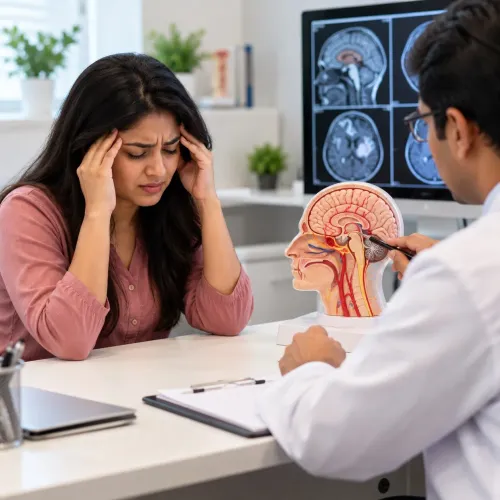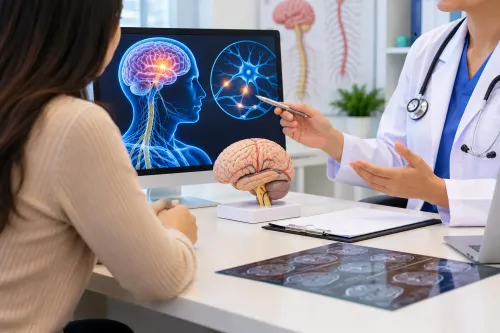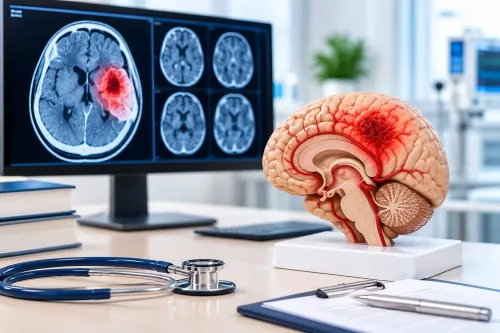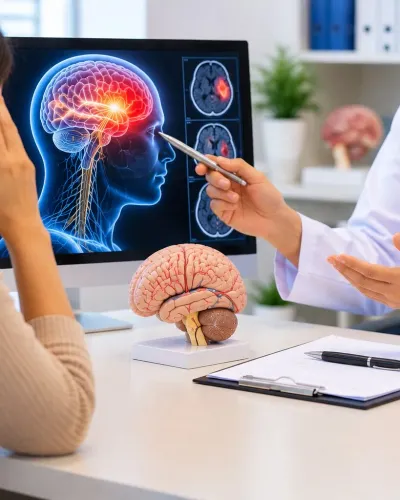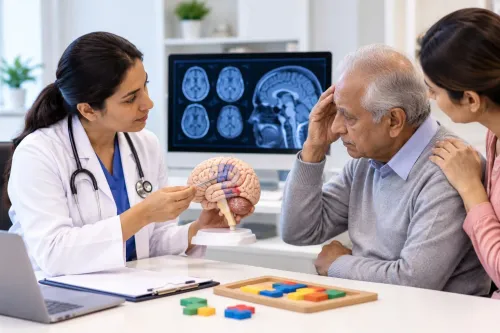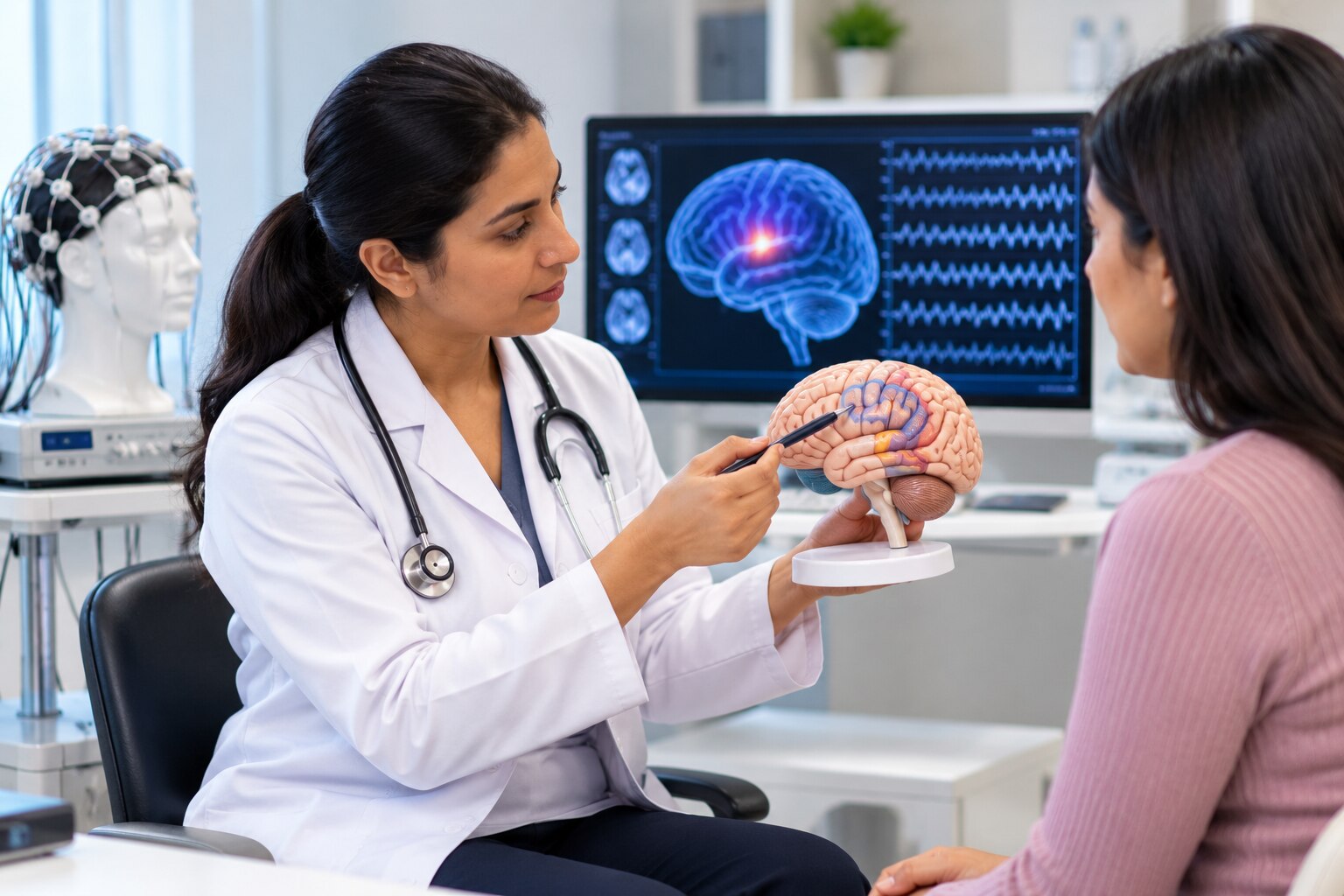
Treatment and monitoring answer different questions: treatment aims to reduce future seizures, while monitoring records an event or brain activity to clarify what is happening. By comparing the available tests, emergency thresholds and follow-up decisions, your family can prepare for a more focused neurological consultation and avoid changing medication when better information is needed first.
Key takeaways
- A suspected seizure does not automatically mean epilepsy.
- Choose monitoring based on whether the event is ongoing, infrequent, or sleep-related.
- Bring a timeline, witness account, video, medication list, and test reports.
- Call emergency services for prolonged, repeated, or injury-causing seizures.
Treatment or monitoring: which question needs an answer first?
A single suspected seizure is not automatically epilepsy, so the first question is whether the event was epileptic and whether another seizure is likely. Epilepsy treatment versus seizure monitoring in Mumbai is complementary: monitoring clarifies the event, while anti-seizure medicine reduces future seizures when diagnosis and recurrence risk justify it.
Monitoring should come before medication changes after a first suspected seizure, unexplained blackout, conflicting witness accounts, unusual movements, suspected non-epileptic events, or seizures continuing despite medication.
| Question | Useful next step | Why it matters |
|---|---|---|
| Was the event epileptic? | EEG or video-EEG monitoring | A normal routine EEG does not rule out epilepsy, and an abnormal tracing does not prove every blackout is epileptic. |
| Is there a structural cause? | MRI with an epilepsy-specific protocol | It evaluates the brain for abnormalities relevant to treatment and surgical planning. |
| Is urgent imaging needed? | CT scan | CT can identify urgent problems, but it does not replace epilepsy-protocol MRI during an ongoing epilepsy evaluation. |
| Is treatment working? | Review seizure frequency, adherence, sleep, triggers and adverse effects | Repeat EEG is not automatically a measure of treatment success. |
After one unprovoked seizure, starting medicine is individualized. The decision weighs EEG or MRI findings, recurrence risk, the consequences of another seizure, personal preferences and adverse effects. Epilepsy treatment for families in Mumbai therefore means answering four questions: what happened, what type was it, how often does it occur, and is current treatment working?
A neurologist may monitor before changing medication when those answers remain uncertain.
Which monitoring method fits the event you need to capture?
A short clinic recording cannot answer the same question as several days of observation at home or in hospital. Families comparing seizure monitoring in Mumbai should match the test to the event they need to capture.
| Method | Duration and setting | Practical burden | Question it can answer |
|---|---|---|---|
| Routine EEG | Short sample in a clinic | Electrodes on the scalp; no admission | Is there epileptiform activity during this recording? |
| Sleep-deprived EEG | Clinic recording after reduced sleep, with a chance to sleep during testing | Requires restricted sleep and travel while tired | Does reduced sleep make abnormal activity or a typical pattern appear? |
| Ambulatory EEG | Longer recording during home and daily activities | Wearable electrodes and recording equipment; events must be logged | Does an abnormal pattern occur during ordinary life? |
| Inpatient video EEG | Continuous EEG with camera footage in hospital | Admission, monitoring, and activity restrictions | Does a typical event match simultaneous electrical activity? |
Inpatient video EEG is especially valuable when fainting, a sleep disorder, functional seizures or another non-epileptic event could explain the episode. It lets clinicians compare what the body does with what the brain’s electrical recording shows, but it is unnecessary for every person with straightforward, established epilepsy.
A normal routine EEG does not rule out epilepsy because no abnormal activity may occur during the sample. An abnormal tracing does not prove that every blackout or movement is epileptic. Repeat monitoring belongs when diagnosis, seizure type or treatment direction remains uncertain—not as an automatic measure of treatment success.
That distinction matters when choosing epilepsy care options in Mumbai.
What should your family record and bring to the neurologist?
A clear record strengthens seizure monitoring in Mumbai and supports epilepsy treatment for families in mumbai. Bring a phone video only when filming does not delay first aid: record from a safe distance, never restrain the person or put anything in the mouth to obtain better footage.
- Write the date, start time, duration, awareness and recovery.
- List every medicine name, strength, dose and usual dosing schedule.
- Record missed doses, late doses, recent sleep loss, fever, illness, alcohol and other relevant exposures.
- Ask each witness to describe the onset, body movements, breathing, skin or lip colour and behaviour afterwards.
| Detail to record | Specific question | Why it matters |
|---|---|---|
| Event timing | Did it occur during sleep, after standing, or after a medication change? | These patterns can point toward sleep-related episodes, fainting or medication-related problems. |
| Possible trigger | Was there pain, emotional stress, fever, illness or sleep loss? | Triggers help the neurologist compare competing explanations. |
| Awareness | Could the person respond, remember the event or follow instructions? | Awareness helps classify the episode. |
| Recovery | Was there confusion, sleepiness, weakness or rapid return to normal? | Recovery features distinguish seizure-like events from fainting and functional events. |
Do not coach witnesses to use medical labels; their plain description is more useful than “it looked like a seizure.” Bring the timeline, video and medicine list to the appointment, including episodes that seem minor or unusual.
When is emergency help needed, and when is planned review enough?
Call emergency help for a seizure lasting five minutes or longer, repeated seizures without recovery between them, breathing difficulty, serious injury, a seizure in water, pregnancy, diabetes or a first-ever seizure. Do not wait for a planned appointment.
1. Clear furniture, glass and other hazards. Cushion the head with something soft, loosen tight clothing and start timing the event.
2. Turn the person onto their side when possible, especially after jerking stops, to help keep the airway clear.
3. Do not restrain them or put fingers, a spoon or any object in the mouth. Do not give food, water or tablets until full alertness returns.
4. Call emergency services if the seizure meets any emergency criterion, even if movement stops before help arrives. A safe phone video can help later only when filming does not delay first aid.
5. Arrange prompt outpatient assessment after a brief event when the person has recovered but the diagnosis, need for medicine or recurrence risk remains unclear. Ongoing monitoring is more useful than an immediate medication change when events are infrequent, eyewitness accounts conflict, or episodes follow missed doses, irregular timing, sleep deprivation or a drug interaction.
Never stop anti-seizure medicine abruptly. For epilepsy treatment for families in Mumbai, discuss valproate and other medicine risks, contraception, folic acid and seizure control with a specialist before changing treatment or planning pregnancy. These questions belong in epilepsy care options in Mumbai, alongside a written missed-dose plan and uninterrupted medicine supply.
How should you choose ongoing epilepsy care in Mumbai?
Choose a seizure doctor near me in Mumbai by clinical capability, not proximity or online ratings. Compare epilepsy care options in Mumbai by asking whether the neurologist can distinguish epileptic seizures from fainting, sleep disorders and functional events, arrange the right EEG or video-EEG, and request an epilepsy-protocol MRI when indicated.
Check these points before choosing:
- Can the doctor review medicine interactions, adherence, missed doses and an uninterrupted, affordable supply?
- Is there a written plan for a missed dose, breakthrough seizure and emergency backup?
- Does the neurologist review registration with India’s medical regulator and explain when specialist referral is needed?
| Question | What good follow-up covers | What it prevents |
|---|---|---|
| Seizure control | Frequency, duration, triggers and recovery | Assuming every event is treatment failure |
| Medicine response | Benefit, adverse effects, interactions and dosing reliability | Unplanned or abrupt medicine changes |
| Daily risks | Sleep, safety, driving and work-related hazards | Preventable injuries |
| Testing | EEG or video-EEG only when diagnosis, seizure type or treatment direction remains uncertain | Repeating EEG simply to prove treatment works |
Dr. Sachin Adukia may be relevant when your family needs coordinated diagnosis, monitoring and medication review, provided the consultation answers these questions and sets an escalation plan.
Drug-resistant epilepsy means failure of two appropriately chosen, tolerated and adequately used anti-seizure medicine schedules, alone or in combination, to achieve sustained seizure freedom. That finding calls for specialist epilepsy review and possible surgical or advanced-treatment assessment, not indefinite medication changes without reassessment.
Related service
Epilepsy & Seizure Treatment Dr. Sachin Adukia is a trusted and experienced Neurologist offering comprehensive Epilepsy and Seizure Disorder treatment with a focus on accurate... View service → |
Frequently asked questions
Should a family choose epilepsy treatment or seizure monitoring first?
First establish whether the event was epileptic and assess the chance of another seizure. Monitoring clarifies the event; anti-seizure medicine reduces recurrence risk when diagnosis and clinical assessment support treatment.
Which seizure monitoring method fits the event?
A routine EEG may support assessment after an event. Prolonged ambulatory EEG or video-EEG is more useful when symptoms are infrequent, occur during sleep, or need to be matched with brain activity and video.
What should families bring to a neurologist appointment?
Bring a seizure timeline, witness description, safe video if available, medication and medical-history lists, emergency records, and previous EEG, MRI, CT, or blood-test reports.
When does a seizure need emergency help?
Seek emergency help for a seizure lasting five minutes or longer, repeated seizures without recovery, breathing difficulty, serious injury, a first seizure, pregnancy, or an event in water. Arrange planned review after a brief, recovered event when no emergency warning sign is present.
Keywords