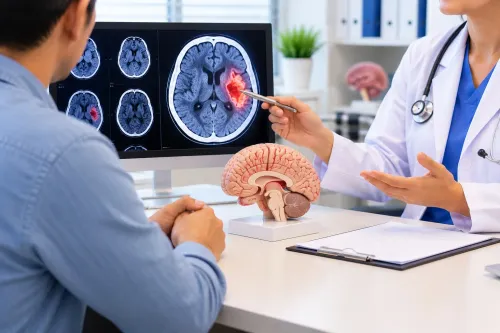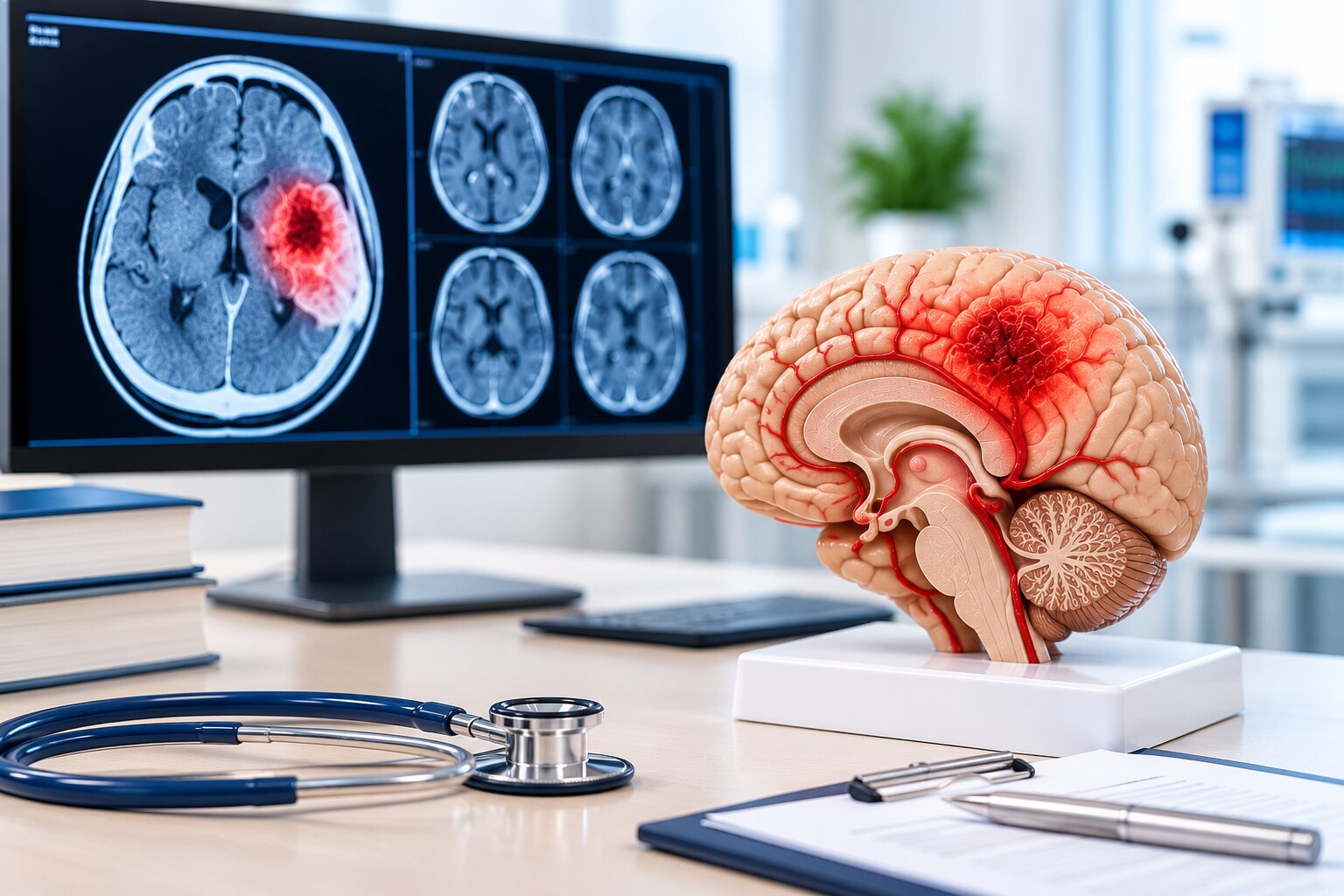
A sudden facial droop, one-sided weakness, severe headache, vomiting, seizure or reduced alertness in an older adult requires a 112 call, not a clinic appointment. You will learn what to do before the ambulance arrives, how hospitals identify the type and cause of bleeding, which treatments may be considered, and how to organise safer recovery after discharge.
Key takeaways
- Call 112 immediately for sudden weakness, speech changes, collapse or reduced alertness.
- Keep the older adult still, monitor breathing and avoid food, drink or medicines.
- Ask doctors about the bleed’s location, cause, pressure effects and treatment options.
- Plan follow-up for swallowing, movement, speech, cognition, medicines and blood pressure.
Recognise the emergency and act before the ambulance arrives
A sudden facial droop, one-sided weakness or numbness, slurred speech, severe headache, vomiting, seizure, collapse, new confusion, loss of balance or reduced alertness requires calling 112 immediately. Do not wait for an outpatient appointment with a brain hemorrhage doctor in Mumbai; brain bleeding and other strokes need emergency assessment.
- Call 112 and say “suspected stroke” or “possible brain haemorrhage.” Give the exact address, building entrance and a callback number.
- Record when the person was last known well, even if symptoms were noticed later. Tell the dispatcher whether the person takes blood thinners.
- Keep the person still, supported and nil by mouth. Give no food, water, aspirin or oral medicine; swallowing can fail silently and cause choking or aspiration pneumonia.
- If the person is unconscious but breathing, place them on their side, keep the airway clear and watch their breathing. Follow the dispatcher’s instructions if breathing stops.
- Collect medicine strips, prescriptions, anticoagulant details and identification for the ambulance team. Do not drive if an ambulance is available.
| Situation | Immediate action | Do not do |
|---|---|---|
| Awake and responding | Keep them calm and observe changes | Do not let them walk |
| Vomiting or drowsy | Turn them on their side and clear the mouth | Do not give water |
| Unconscious but breathing | Maintain the side position and monitor breathing | Do not leave them alone |
How doctors identify the type, site and cause of the bleed
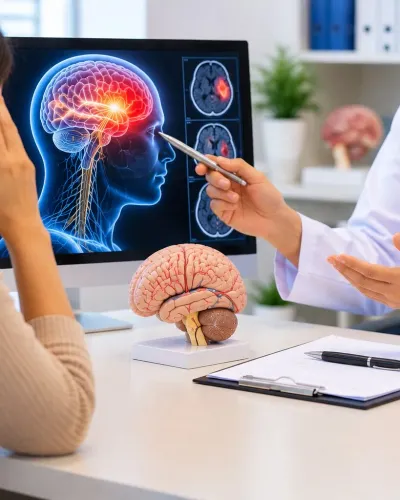
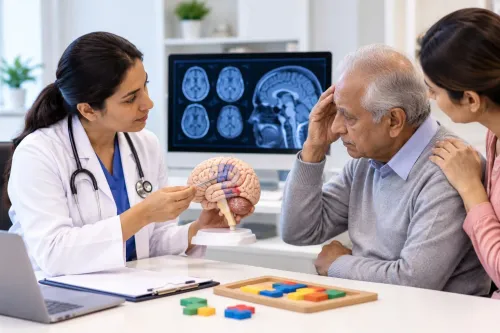
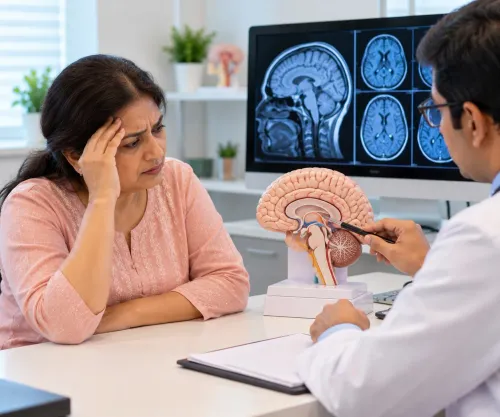
An urgent non-contrast CT scan of the head usually settles the first question: is this bleeding or an ischaemic stroke caused by a blocked artery? Blood appears quickly on CT.
A subdural haematoma appears as blood between the brain’s surface and its outer covering, often as a crescent after a fall; an intracerebral haemorrhage lies within brain tissue. A fall does not exclude other stroke types.
The scan also shows the bleed’s side, approximate size, pressure on nearby brain tissue and hydrocephalus. CT angiography then looks for an aneurysm, arteriovenous malformation or another abnormal vessel. MRI can clarify an uncertain or older bleed after the patient is stable.
- Blood glucose: low glucose can imitate stroke symptoms.
- Platelet count and coagulation tests: these reveal bleeding risks and guide reversal of anticoagulants.
- Blood-pressure measurement: severe hypertension can worsen an intracerebral bleed.
The distinction changes treatment: clot-busting drugs used for selected ischaemic strokes can be dangerous during active bleeding, while a subdural haematoma may require neurosurgical drainage. Ask whether the hospital has 24-hour CT, neurocritical-care monitoring and urgent neurosurgical review. A hemorrhagic stroke specialist in Mumbai works within that wider team.
Before food, drink or oral medicines, the patient needs a swallowing assessment. A normal voice does not prove swallowing is safe.
What urgent hospital treatment may involve for an older patient
A plan for brain hemorrhage treatment for elderly in Mumbai must assess more than age. Doctors weigh frailty, independence before the bleed, cognition, bleed size and location, neurological findings, anticoagulant use and the patient’s expressed wishes. A single score cannot prove that treatment is futile.
Blood pressure is lowered smoothly, not abruptly. For an initial systolic pressure of 150–220 mmHg, the team may target about 140 and maintain 130–150; dropping below 130 can reduce brain perfusion. Kidney disease, longstanding hypertension and other conditions change the target.
Hospital treatment may include:
- Anticoagulant reversal with a drug matched to the medicine, such as idarucizumab for dabigatran or andexanet alfa for selected factor Xa inhibitors. Do not give another dose until the treating team advises it.
- Antiseizure treatment when a clinical or electrographic seizure occurs. Continuous EEG can uncover non-convulsive seizures in a patient with persistently or fluctuatingly reduced consciousness; routine preventive medication is not for everyone.
- Treatment for swelling, including careful ventilation, positioning and medicines that draw fluid from brain tissue when indicated.
- An external ventricular drain if blood blocks cerebrospinal-fluid flow and causes hydrocephalus.
- Neurosurgical assessment for evacuation, decompression or another procedure when the bleed’s site, size and pressure effects make surgery appropriate.
Sedation, seizures, hydrocephalus and reversible swelling can temporarily worsen consciousness. Families need time for repeat examinations before decisions about treatment limits, alongside the patient’s values and previously stated wishes.
What brain haemorrhage recovery care should cover
It must cover safe swallowing, movement, communication, thinking, mood, vision, bladder and bowel control, nutrition, medication use and caregiver skills. Brain hemorrhage recovery care should begin once the patient is medically stable, with goals adjusted for consciousness, blood pressure, intracranial pressure, surgery, fatigue and frailty.
Before food, drink or oral medicines, request a swallowing assessment. A normal voice or a few successful sips does not rule out aspiration, which can cause pneumonia, dehydration and malnutrition.
The rehabilitation plan should address:
- Physiotherapy for transfers, walking, balance and fall prevention; occupational therapy for dressing, bathing, feeding and home tasks.
- Speech and language therapy for speaking, understanding, reading, writing and swallowing.
- Cognitive and mood assessment, including attention, memory, impulsivity, depression and anxiety.
- Home arrangements such as a clear route to the toilet, grab rails, suitable footwear, lighting, a shower seat and supervision on stairs.
- Caregiver training for safe transfers, feeding, continence care, exercises, warning signs and emergency contacts.
Do not equate early intensive exercise with better recovery. High-dose mobilisation in the first 24 hours can worsen outcomes for some patients, so increase activity gradually.
Blood-pressure monitoring, medication review and prevention of recurrent bleeding are central to brain bleed treatment for seniors; never stop or restart aspirin, anticoagulants or other antithrombotic medicines without the treating team. Decisions should reflect frailty, previous independence, cognition and the patient’s wishes—not age alone.
How to choose the right hospital and follow-up team in Mumbai
Do not choose a hospital because it advertises a brain hemorrhage doctor in Mumbai; choose one that can act overnight. Ask whether it provides 24-hour non-contrast CT, neuro-ICU monitoring, urgent anticoagulant reversal, neurosurgical assessment and swallowing assessment before food, drink or oral medicines.
Check these points before transfer or discharge:
- A named acute stroke neurology or neurocritical-care team is available.
- Neurosurgery and neuroradiology can review the scan promptly.
- Nurses monitor blood pressure, consciousness, seizures and hydrocephalus.
- Physiotherapy, occupational therapy, speech and swallowing therapy, and dietetic support continue after ICU.
- The follow-up service reviews medicines, blood pressure, cognition, mood, mobility, continence and caregiver skills.
| Hospital choice | Strength | Limitation |
|---|---|---|
| Tertiary neuro centre | 24-hour imaging, neuro-ICU and surgery in one system | Travel and crowding can burden a frail patient |
| Local hospital with transfer access | Faster admission near home | Confirm who performs urgent CT, reversal and neurosurgical transfer |
| Outpatient neurology clinic | Useful for medication and recovery reviews after stabilisation | Not suitable for sudden deterioration or untreated swallowing risk |
Age alone should not close the door to active treatment. Compare frailty, previous independence, cognition, bleed location and size, examination findings, anticoagulant use and the patient’s expressed wishes; early sedation, seizures or swelling can distort prognosis.
A hemorrhagic stroke specialist in Mumbai, including Dr. Sachin Adukia, should help translate those facts into a plan that respects the patient’s goals.
Related services
Brain Hemorrhage Treatment Dr. Sachin Adukia is a highly experienced neurologist specializing in the diagnosis and advanced treatment of brain hemorrhage and other critical... View service → |
Stroke Management Dr. Sachin Adukia offers comprehensive and advanced Stroke Management services with a strong focus on timely diagnosis, emergency care, and long-term... View service → |
Frequently asked questions
What should you do before an ambulance arrives for a suspected brain haemorrhage?
Call 112, note when symptoms began, keep the person still, monitor breathing and avoid giving food, drink or medicines.
How do doctors identify the type and cause of a brain bleed?
Doctors use the symptom history, neurological examination, brain imaging and selected blood-vessel or blood tests to identify the bleed’s type, site and cause.
What can urgent brain haemorrhage treatment involve for an older patient?
Hospital care can include close monitoring, treatment for brain pressure and blood pressure, reversal of blood-thinning medicines, seizure management and surgery when indicated.
What should brain haemorrhage recovery care cover?
Recovery care should address swallowing, mobility, speech, cognition, mood, medicines, blood pressure, falls, caregiver support and scheduled neurological follow-up.
Keywords