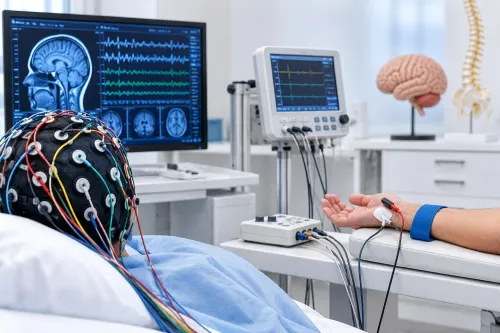
A memory complaint does not automatically mean dementia, and a low score on a brief test does not by itself justify medication. By the end, you will know what testing can reveal, when a neurological consultation is needed, how reversible causes are investigated, and what treatment may follow in Mumbai.
Key takeaways
- Start with assessment when the cause of memory change is unclear.
- Cognitive testing measures memory, attention, language and daily-function effects.
- Treatment depends on the confirmed cause, not the test score alone.
- Seek urgent care for sudden confusion, weakness, speech trouble or severe headache.
Treatment or testing: which question needs answering first?
The first question is not treatment or testing; it is what needs explaining. Memory loss treatment versus cognitive testing in Mumbai is a sequence, not an either-or choice: testing measures current abilities and their effect on daily function, while treatment addresses an identified cause or symptoms.
| Step | What it answers | Output and limit |
|---|---|---|
| Brief screening with the MoCA or MMSE | Is there a signal that deserves closer review? | A screening result, not a dementia diagnosis or medication decision |
| Structured cognitive evaluation | Which abilities are affected, and how does this change affect daily tasks? | A detailed cognitive profile; it cannot identify the medical cause alone |
| Neurological consultation | What conditions, medicines or health problems could explain the change? | A clinical differential diagnosis based on history, examination and selected tests |
| Formal dementia assessment | Does cognitive decline interfere with independent everyday functioning? | A diagnosis when the full evidence supports it, not from one score |
| Treatment planning | What identified cause or symptoms should be addressed? | A treatment and follow-up plan, which can change as evidence develops |
A low MoCA or MMSE score can reflect education, literacy, language, anxiety, depression, hearing or vision rather than dementia. Use an appropriate validated language version and interpret the result in context; one low score cannot justify medication.
A cognitive test measures performance, not its cause. Diagnosis requires the person’s history, day-to-day examples, examination and medication review. Follow-up testing can show whether abilities are changing, while treatment targets the cause found or supports symptoms when no reversible cause is identified.
What does a cognitive evaluation actually measure?
A cognitive evaluation for adults in Mumbai measures how thinking works now, not simply whether you remember a name. It examines:
- Orientation: knowing the date, place and situation
- Sustained attention: staying focused without losing the thread
- Processing speed: taking in information and responding efficiently
- New learning and delayed recall: storing information and retrieving it later
- Language: understanding, naming, speaking and finding words
- Visuospatial skills: judging space, shapes and routes
- Executive function: planning, organising, inhibiting responses and switching between tasks
The practical question is whether these abilities affect managing money, taking medicines correctly, meeting work demands, driving safely or spotting household hazards such as an unattended stove. A score matters more when it matches a change in daily function.
Use an appropriate validated language version. The examiner must also account for schooling, literacy, premorbid ability, multilingualism, cultural familiarity, hearing and vision; an unadjusted cutoff can mistake limited test familiarity or sensory difficulty for cognitive decline.
If a brief screen is inconclusive, a family member can describe day-to-day changes, an interpreter can support communication without informal translation, and formal neuropsychological testing can map strengths and weaknesses in greater detail.
One score cannot reliably separate lifelong low performance from new decline. Repeated assessments, interpreted alongside function and history, can show whether abilities are stable, worsening or improving over time.
How should a Mumbai adult move from concern to assessment?
Book a planned appointment when memory change affects independence, work, driving, medicines or finances, or when family members disagree about what is happening. A memory loss doctor in Mumbai may be a neurologist, geriatrician, psychiatrist with cognitive expertise or a coordinated memory service.
1. Prepare a symptom timeline: when the change began, examples, progression and its effect on daily tasks. Bring a complete medicine and supplement list, past reports, sleep and mood information, alcohol use, education and work history, and a trusted informant who knows your routine.
2. Expect the clinician to combine your history with day-to-day function, family observations, neurological and physical examination, and medication review. Selected blood tests or imaging follow the clinical questions rather than a fixed package.
3. Ask what treatable contributors need checking. These include sedating or anticholinergic medicines, depression, sleep apnoea, thyroid disease, vitamin B12 deficiency, hearing or vision loss, alcohol use, infection, metabolic illness and neurological disease.
4. Do not assume you need a scan immediately. MRI or CT is chosen according to the clinical question, urgency, availability and contraindications; imaging can investigate stroke, tumour, hydrocephalus or dementia subtypes, but it does not diagnose every memory complaint by itself.
5. Agree on the next review and what change to track. Dr. Sachin Adukia can be relevant when you need specialist neurological assessment and a follow-up plan rather than a stand-alone test. Sudden confusion, weakness, speech difficulty, seizure or severe headache requires urgent medical care.
Related services
Memory Loss Treatment Dr. Sachin Adukia is a highly experienced Neurologist offering comprehensive and advanced Memory Loss Evaluation and Treatment for patients of all... View service → |
Dementia Treatment Dr. Sachin Adukia is a highly experienced neurologist providing comprehensive and compassionate Dementia evaluation, treatment, and long-term care. View service → |
What treatment can follow a confirmed cause?
Treatment follows the confirmed cause, not the number on a brief screening test. Memory loss treatment options in Mumbai may target a reversible problem, reduce further brain injury, or manage symptoms after a clinician establishes a working diagnosis.
A cause-focused plan may include:
- Replacing vitamin B12 when deficiency is confirmed
- Treating thyroid disease, depression or sleep apnoea
- Reviewing sedating or anticholinergic medicines and changing them only when safe
- Improving hearing and vision with appropriate assessment and aids
- Managing hypertension, diabetes and high cholesterol
- Stopping smoking, increasing physical activity and addressing alcohol use
Non-drug care protects independence. Use a structured daily routine, regular physical activity, cognitive and social engagement, occupational strategies for medicines, money and household safety, and caregiver education. These measures support function but do not replace diagnosis.
For probable Alzheimer’s disease, a clinician may prescribe donepezil, galantamine or rivastigmine for mild to moderate disease. Memantine is used for severe disease or when acetylcholinesterase inhibitors are unsuitable. These medicines offer symptomatic benefit for some people; they do not reverse Alzheimer’s disease.
Prescribing requires a working diagnosis and review of gastrointestinal effects, weight loss, slow heart rate, fainting and drug interactions. Do not start medication because a brief screen is abnormal. Unverified “brain supplements” are not established substitutes for assessment or evidence-based care.
Which memory changes need planned or urgent care?
Occasional forgetfulness with preserved independence usually fits normal ageing; persistent decline that disrupts complex tasks needs planned assessment.
| Category | What it means | Usual pathway |
|---|---|---|
| Normal ageing | You occasionally forget a name or misplace an item, then remember it; work, medicines, money, travel and safety remain managed | Monitor and mention persistent change at a routine appointment |
| Mild cognitive impairment | Testing and history show measurable decline, but you retain most everyday independence | Planned cognitive and medical evaluation, with follow-up |
| Dementia | Cognitive decline interferes with everyday functioning, such as managing finances, medicines, cooking or navigation | Specialist assessment, diagnosis and a care plan |
Arrange prompt assessment if you get lost in familiar places, repeat questions, make errors with medicines or finances, or change rapidly after a stroke, seizure, infection or head injury. Ask someone who knows your routine to describe practical changes, because memory complaints and observed function can differ.
Seek urgent medical care for sudden confusion, facial droop, weakness, speech difficulty, a seizure, severe headache, fever, marked drowsiness or inability to stay safe. A change over hours or days points away from ordinary progressive dementia and raises concern for delirium, stroke, drug effects, intoxication, withdrawal or another medical illness.
Gradual change usually follows a planned evaluation rather than an emergency scan or immediate dementia label. Follow-up testing becomes useful when it measures the same abilities and tracks daily function over time, since one score cannot establish a cause or prove decline.
Frequently asked questions
Should you choose memory loss treatment or cognitive testing first?
Testing comes first when the cause of memory change is unclear. It measures current abilities and daily-function effects, while treatment addresses an identified cause or symptoms.
What does a cognitive evaluation measure?
A cognitive evaluation examines abilities such as memory, attention, language and executive function, along with how changes affect everyday activities.
How should a Mumbai adult arrange memory assessment?
Record when the changes began, examples from daily life, current medicines and relevant medical history, then arrange an evaluation with a memory loss doctor in Mumbai.
When do memory changes need urgent care?
Seek urgent care for sudden confusion, new weakness, speech difficulty, severe headache or another abrupt neurological change. Plan a clinical assessment for gradual or persistent changes.
Related service
Autoimmune Neurological Disease Treatment Autoimmune Neurological Disease Treatment Dr. Sachin Adukia is a trusted and experienced Neurologist providing comprehensive diagnosis and advanced treatment for autoimmune neurological... View service → |
Keywords