A seizure is an emergency in some situations, but not every episode described as a “fit” is epilepsy. Families need to know what to do immediately, which warning signs require hospital care, how doctors confirm the cause, and when treatment needs to move beyond a first medicine.
Key takeaways
- Start a timer, protect the person from injury and never put anything in their mouth.
- Call an ambulance for a seizure lasting five minutes or repeated seizures without recovery.
- A first seizure needs medical assessment; epilepsy requires a pattern or high recurrence risk.
- Take epilepsy medicines exactly as prescribed and ask about options when seizures continue.
What to do during a seizure and when to call an ambulance
Start a timer as soon as the seizure begins. Keep the person safe without holding them down or putting anything in their mouth.
- Move furniture, sharp objects and hot liquids away.
- Place something soft under the head and loosen tight clothing around the neck.
- Do not restrain the movements, give food, water or medicine, or insert an object between the teeth.
- After the convulsions stop, turn the person on their side and check their breathing.
- Stay with them, note what happened, and call an ambulance if any emergency trigger applies.
Call emergency services or go to an emergency department for a seizure lasting five minutes or longer, repeated seizures without recovery, breathing difficulty, serious injury, or a seizure in water. Get urgent help for a seizure during pregnancy, in a person with diabetes, or for a first-ever seizure.
Do not drive someone who is confused, injured or struggling to breathe.
Seizure treatment for families may include a written rescue plan when prolonged or clustered seizures are a known risk. The plan may prescribe buccal midazolam or rectal diazepam, but only trained carers should give them. Call an ambulance if the seizure continues after the prescribed medicine, breathing is impaired, or recovery is delayed.
Seizure care options discussed at a scheduled specialist visit do not replace emergency assessment.
How doctors tell a first seizure from epilepsy
One suspected seizure does not automatically mean epilepsy. Epilepsy usually requires two unprovoked seizures more than 24 hours apart, or one unprovoked seizure with a high risk of recurrence. Fainting, low blood sugar, stroke, heart-rhythm problems, sleep disorders and psychogenic nonepileptic events can look similar.
1. Record what happened before, during and after the episode. Note warning symptoms, colour change, collapse, stiffening, jerking, staring, responsiveness, tongue injury, bladder loss, confusion and recovery time.
2. Bring a phone video if filming was safe. Also list medicines, missed doses, alcohol, illness, sleep loss, previous head injury or stroke, and other medical problems.
3. Expect a neurological examination. Blood tests are ordered when low glucose, infection, electrolyte disturbance, pregnancy or another provoking cause is possible; an ECG helps when fainting or a heart-rhythm problem could explain the event.
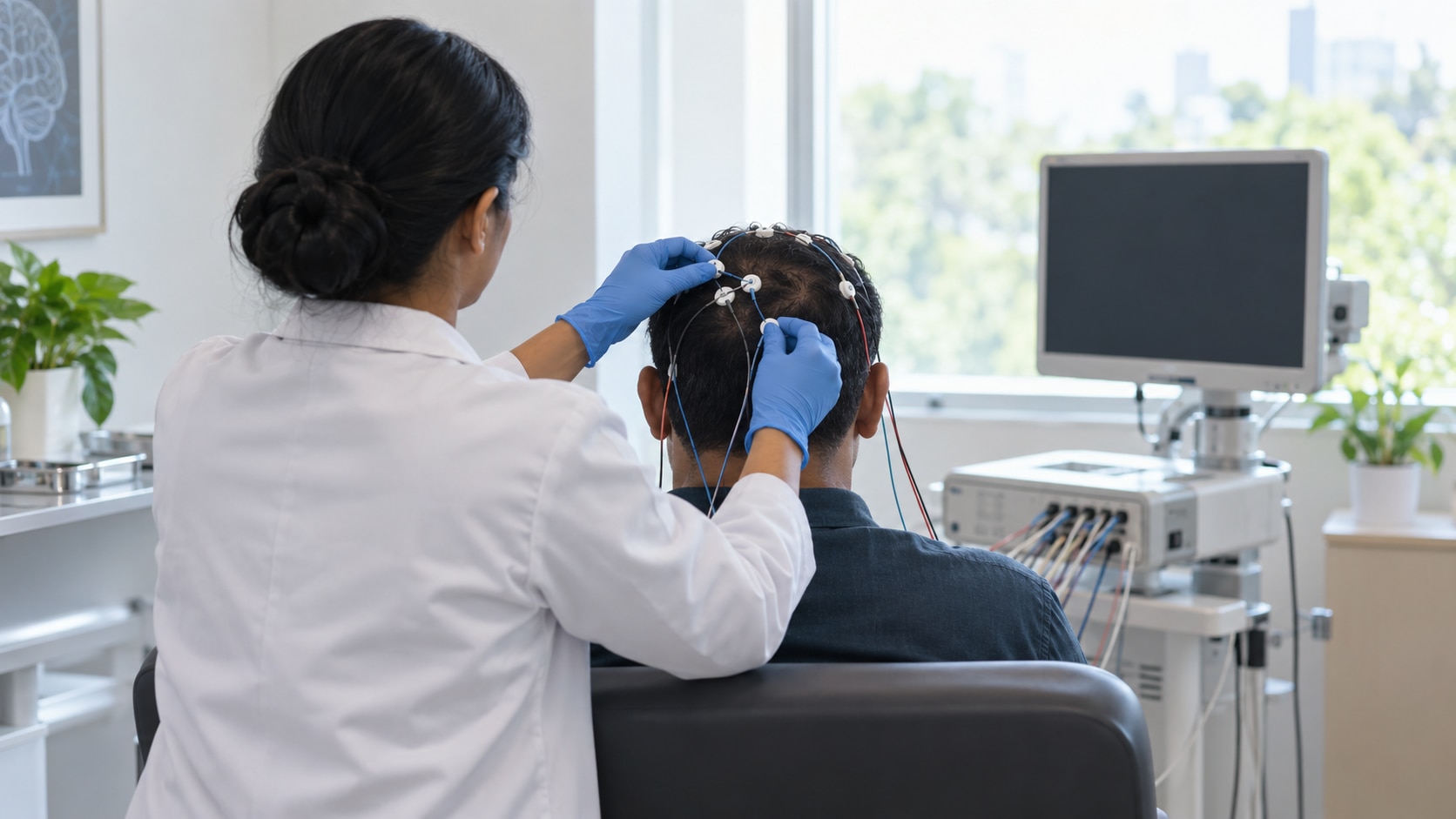
4. Ask about an EEG and brain MRI. A normal routine EEG does not rule out epilepsy, so a sleep-deprived or ambulatory EEG may be considered when the diagnosis remains uncertain. EEG supports the clinical assessment; it does not replace it.
After a first unprovoked seizure, epilepsy treatment in Govandi depends on recurrence risk, not the label alone. An epileptiform EEG, structural brain abnormality or neurological deficit can favour starting medicine, balanced against adverse effects and the person’s preferences. This practical assessment is central to epilepsy seizure treatment for Govandi families.
Why the seizure type changes the treatment decision
The visible pattern changes which tests, medicines and referrals make sense. Focal seizures begin in one brain region and can cause unusual sensations, staring, repetitive movements or impaired awareness before spreading into bilateral tonic-clonic convulsions. Do not choose treatment from the word “fits” alone: a medicine useful for one seizure type can worsen another.
| Pattern | What you may see | Treatment and assessment implication |
|---|---|---|
| Focal | Altered sensation, staring, automatisms or impaired awareness; sometimes spreading to convulsions | Confirm the focus with witness details, EEG and epilepsy-protocol MRI; choose a focal-seizure medicine |
| Generalised tonic-clonic | Stiffening, rhythmic jerking and loss of awareness | Needs classification as generalised epilepsy before selecting medicine |
| Absence | Brief lapses in awareness, often repeated | A drug for focal seizures can be unsuitable; EEG helps confirm the pattern |
| Myoclonic | Sudden shock-like jerks, often around waking | Ask about morning timing and triggers; medicine selection differs from absence or focal seizures |
| Non-epileptic event | A seizure-like episode without epileptic electrical activity | Requires a different assessment and treatment plan, often using video-EEG |
When the pattern is unclear, bring:
- A careful witness account or phone video recorded safely
- The timing, triggers, awareness, movements and recovery period
- All medicines, missed doses, illness, sleep loss and alcohol exposure
After two appropriately chosen, tolerated and adequately tried medicines fail, ask an epilepsy specialist in Govandi about prompt comprehensive review. Seizure care options can include video-EEG, epilepsy-protocol MRI, neuropsychology, surgery assessment, neuromodulation or dietary therapy.
Medicines, missed doses and everyday seizure safety
Clinicians usually start with one anti-seizure medicine matched to the seizure type, age, pregnancy potential, other medicines, kidney or liver function, side effects, school or work demands and lifestyle. If seizures continue, they check the diagnosis, seizure classification, dose and adherence before switching or adding treatment.
Do not stop suddenly, skip doses intentionally or share prescriptions. Valproate needs specific pregnancy planning because fetal exposure can cause birth defects and neurodevelopmental harm; never stop it abruptly without medical advice. This is central to safe seizure treatment for families seeking epilepsy treatment in Govandi.
| Problem | What to do | Avoid |
|---|---|---|
| Missed dose | Follow that medicine’s written instructions and ask a pharmacist or prescribing clinician | Do not double the next dose |
| Vomiting after a dose | Ask whether the medicine was absorbed and follow exact medicine-specific advice | Do not repeat or change the dose independently |
| New medicine, supplement or illness | Check for interactions before using it; report diarrhoea, fever or other illness | Do not substitute brands or use herbal products without advice |
| First medicine fails | Review adherence, dose, diagnosis and seizure type before changing treatment | Do not assume two medicines are needed immediately |
At reviews, discuss injuries, mood, memory, learning, sleep deprivation, alcohol, driving and medicine side effects. Children need a written school or childcare emergency plan. Use showers or supervision instead of unsupervised baths, and never swim alone. A scheduled epilepsy treatment review is not emergency care for a prolonged seizure, breathing difficulty or serious injury.
What to consider when seizures continue despite medicines
After two appropriately chosen, tolerated and adequately tried anti-seizure medicines fail to control seizures, ask whether this is drug-resistant epilepsy. Do not continue indefinite medication changes without specialist review.
For epilepsy seizure treatment for Govandi families, request referral to a comprehensive epilepsy service. Assessment may include:
- Video-EEG to match seizures with brain activity
- Epilepsy-protocol MRI to find a subtle structural cause
- Neuropsychology testing of memory, attention and language
- Review of whether seizures start in a removable focal brain region
Surgery assessment is not reserved for the final stage of severe disability. If seizures arise from a removable region, surgery can offer seizure freedom for some people and deserves discussion after drug resistance is established, especially when seizures cause injuries or repeated emergency visits.
Other seizure care options include vagus nerve stimulation and other neuromodulation devices. Ketogenic dietary therapy suits selected drug-resistant epilepsies, particularly some childhood syndromes, but it must be started and monitored by an experienced epilepsy doctor and dietitian. Constipation, vomiting, kidney stones, abnormal lipids, nutrient deficiencies and slowed growth are possible concerns.
When comparing an epilepsy specialist in Govandi, Dr. Sachin Adukia can review seizure records, medicines and test results, then help decide whether referral or another pathway fits. A scheduled consultation is not emergency care: seek urgent help for a prolonged seizure, repeated seizures without recovery, serious injury or a first seizure.
Related service
Epilepsy & Seizure Treatment Dr. Sachin Adukia is a trusted and experienced Neurologist offering comprehensive Epilepsy and Seizure Disorder treatment with a focus on accurate... View service → |
Frequently asked questions
What should families do during a seizure?
Start a timer, move nearby hazards away, cushion the person’s head and loosen tight clothing. Once jerking stops, turn them onto their side and stay with them. Do not restrain them or put food, water or objects in their mouth.
When should I call an ambulance for a seizure?
Call an ambulance if the seizure lasts five minutes or longer, another seizure starts before the person recovers, breathing remains difficult, the person is seriously injured, the seizure happens in water, or it is a first seizure.
How do doctors distinguish a first seizure from epilepsy?
Doctors review what happened before, during and after the event, examine the person and may order blood tests, an EEG or brain imaging. Epilepsy is diagnosed after unprovoked seizures or when testing shows a high risk of recurrence.
Why does seizure type affect epilepsy treatment?
A medicine that suits focal seizures may not treat absence, myoclonic or tonic-clonic seizures effectively, and some medicines can worsen particular seizure types. Doctors use the seizure pattern, age, health, pregnancy plans and other medicines to choose treatment.
What should I do after a missed epilepsy medicine dose?
Check the medicine’s patient information leaflet or contact the prescribing doctor or pharmacist for instructions. Do not double the next dose unless a clinician specifically tells you to, and record missed doses and any seizures.
Keywords