Weakness that progresses over hours or days should never be treated like ordinary tiredness. One neurological condition associated with rapidly developing weakness is Guillain–Barré syndrome, commonly called GBS. Because symptoms can progress unpredictably and sometimes affect breathing or swallowing, Guillain–Barré syndrome treatment generally requires timely medical assessment and, when suspected, hospital-based monitoring.
Patients and caregivers in Ghatkopar and other parts of Mumbai, Maharashtra, can benefit from recognizing the pattern that makes GBS different from routine muscle weakness.
How Guillain–Barré Syndrome Usually Develops
GBS is an immune-mediated neurological disorder in which the body's immune response mistakenly affects peripheral nerves. It may occur after an infection, although the exact preceding event and presentation vary among patients.
A commonly described pattern is weakness beginning in the legs and progressing upward. However, GBS can present differently, and symptoms alone cannot confirm the diagnosis.
Possible features include:
- Tingling in the feet or hands
- Increasing leg weakness
- Difficulty climbing stairs
- Trouble standing or walking
- Weakness involving the arms
- Facial weakness
- Difficulty swallowing
- Reduced or absent reflexes
- Breathing difficulty in severe cases
Some patients also experience pain, particularly in the back or limbs.
Why GBS Can Become an Emergency
The concern with Guillain–Barré syndrome is not simply muscle weakness. Nerves involved in breathing, swallowing, heart rate, and blood-pressure regulation may also be affected.
A person who could walk independently one day may sometimes experience significant deterioration over a relatively short period. This is why suspected GBS needs prompt assessment rather than waiting several days to see whether weakness resolves naturally.
Breathing difficulty, inability to walk, swallowing problems, rapidly worsening weakness, or facial weakness are especially important warning signs.
How Doctors Investigate Suspected GBS
Diagnosis combines clinical findings with appropriate investigations.
A neurologist may examine muscle strength and reflexes and review how quickly symptoms developed. The history of recent fever, respiratory infection, gastrointestinal illness, vaccination, medicines, and other relevant factors may also be considered.
Investigations can include:
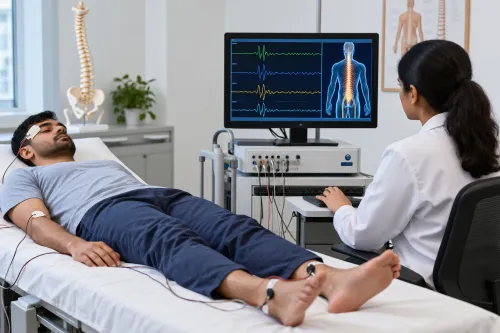
Nerve conduction studies: These evaluate how electrical signals travel through peripheral nerves and may demonstrate patterns consistent with particular forms of GBS.
Lumbar puncture: Cerebrospinal fluid analysis may provide supportive evidence in the appropriate clinical setting.
Blood tests: These can help exclude other causes of rapidly developing weakness.
Additional tests may be needed when the presentation is atypical.
What Guillain–Barré Syndrome Treatment May Involve
Patients with suspected or confirmed GBS are commonly monitored in hospital because neurological and respiratory function can change.
Specific immune treatments may include intravenous immunoglobulin, commonly called IVIG, or plasma exchange. The appropriate option depends on clinical circumstances and specialist assessment.
Supportive treatment is equally important. Depending on severity, care may involve respiratory monitoring, pain management, prevention of complications associated with immobility, physiotherapy, nutritional support, and rehabilitation.
Recovery varies. Some people improve substantially over time, while others need prolonged rehabilitation for residual weakness or fatigue.
Do Not Wait for Complete Paralysis
One of the most important misconceptions is that GBS should only be suspected when someone becomes completely unable to move. Earlier symptoms may simply look like unusual tingling, leg heaviness, or difficulty walking.
For families in Ghatkopar, recognizing a rapidly changing neurological problem can shorten the time between symptom onset and assessment. Dr. Sachin Adukia evaluates patients with neurological weakness to determine whether the pattern could represent GBS or another condition requiring urgent investigation.
When weakness is progressing rather than remaining stable, the speed of evaluation matters. Guillain–Barré syndrome is treatable, but timely recognition, appropriate monitoring, and structured neurological care are central to managing its potentially serious complications.
Keywords