Burning, electric-shock pain or numbness becomes more concerning when you also lose grip, walking ability, balance or power in a limb. You will learn how to recognise emergency warning signs, prepare for a neurological assessment, understand the tests used to find the cause, and compare treatment choices safely.
Key takeaways
- True loss of strength is more concerning than movement limited by pain.
- Sudden weakness, facial drooping, speech trouble, or severe imbalance needs emergency care.
- Nerve conduction studies and electromyography can help locate nerve damage.
- Treatment combines cause-specific care, pain control, rehabilitation, and fall prevention.
Does the pain pattern point to a nerve problem, and when is weakness an emergency?
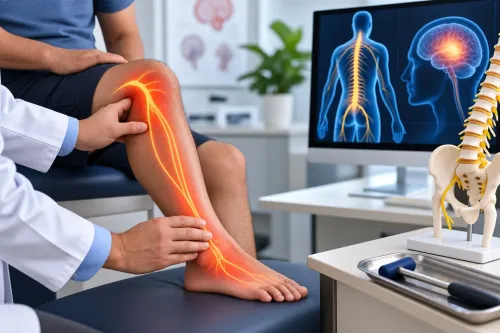
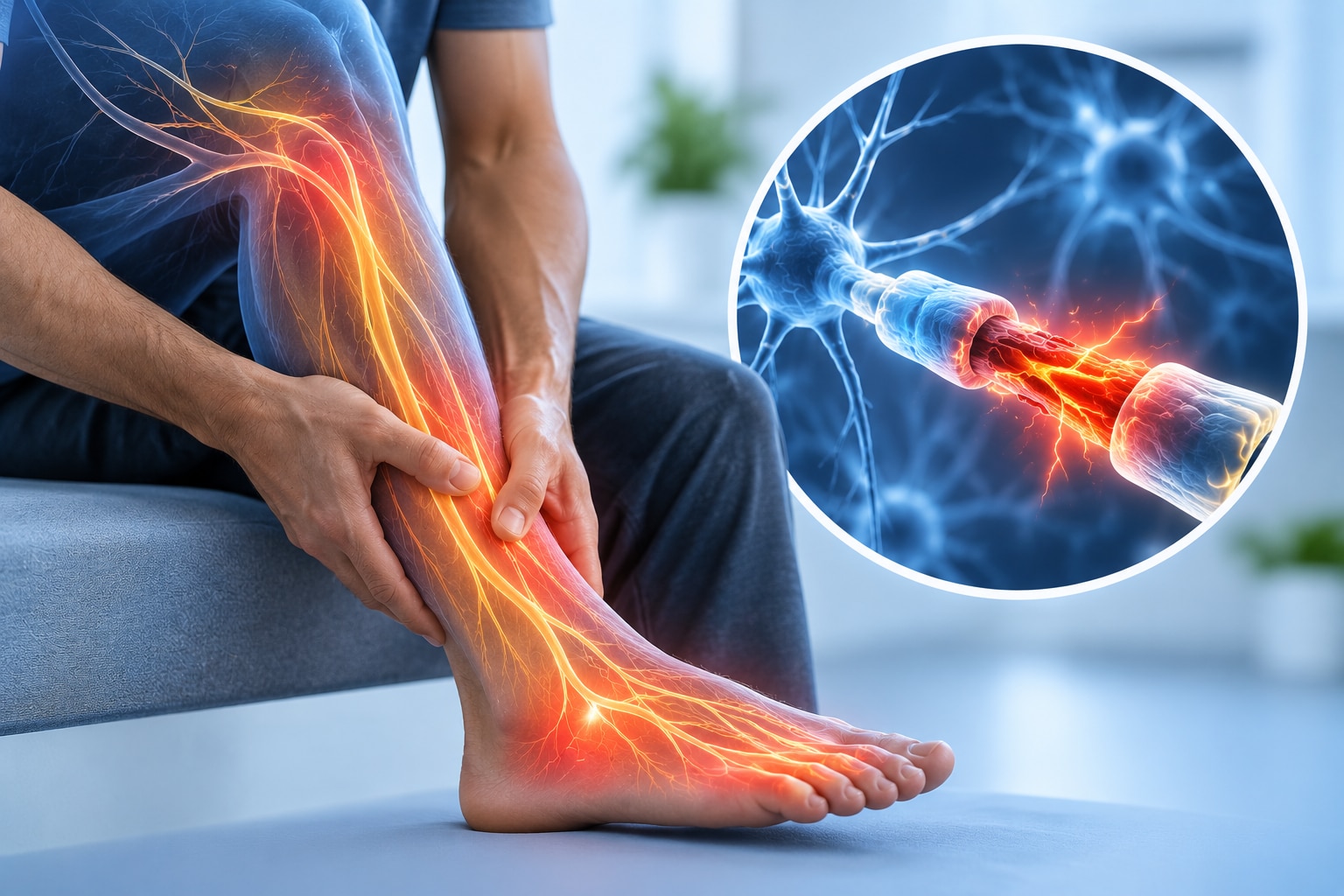
Burning, electric shocks, pins and needles, numbness, or pain from a light touch point toward neuropathic pain, but they do not identify its cause. Check whether movement is limited because pain stops you or because the limb cannot generate force; true power loss is more concerning.
| Pattern | Features that point to it |
|---|---|
| Neuropathic | Burning, shocks, tingling, numbness, or pain from gentle touch in a nerve-like area |
| Muscle | Deep soreness or cramping, usually worse when the muscle contracts or is pressed |
| Joint | Localised pain, stiffness, swelling, or restricted movement at one joint |
| Vascular | Cramping with walking, or a cold, pale, blue, swollen, or unusually painful limb |
| Referred spinal | Neck or back pain spreading into an arm or leg; weakness, altered reflexes, or numbness suggest nerve-root involvement |
Do not book routine nerve pain treatment Powai if any of these occur:
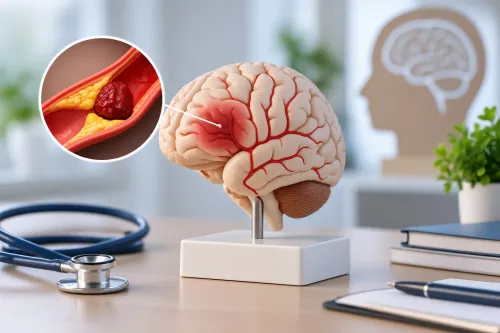
- Sudden one-sided weakness, facial drooping, speech or visual difficulty, severe imbalance, or a sudden severe headache: seek emergency stroke assessment.
- Rapidly worsening weakness, new difficulty walking, breathing difficulty, or trouble swallowing: go to hospital urgently.
- Severe back pain with leg weakness, new bladder or bowel loss, or numbness around the saddle area: seek emergency assessment for possible cauda equina compression.
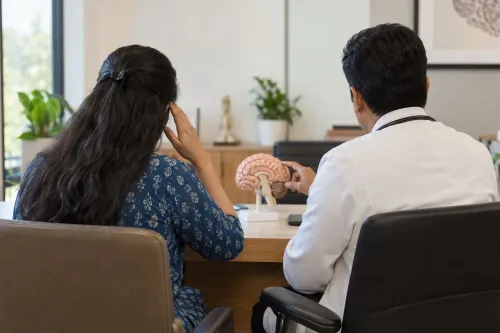
A nerve pain treatment for Powai weakness appointment must address objective strength, reflexes, sensation, gait, coordination, and cranial-nerve function, not just pain relief.
What history and examination reveal about nerve pain with weakness
Before the appointment, record the exact onset, speed of progression, affected body parts and whether symptoms are symmetrical. Note burning, electric shocks, numbness, pins and needles, pain from light touch, true loss of power, or movement limited by pain. Record changes in walking, stairs, balance, grip, handwriting, buttoning clothes and other hand functions.
If “neuropathic pain doctor Powai” is your search, bring this timeline and a complete medication list.
Tell the neurologist about diabetes, vitamin B12 deficiency, thyroid disease, alcohol use, new medicines or chemotherapy, autoimmune illness, recent infections and relatives with similar symptoms. These details help compare common causes with nerve compression, autoimmune neuropathy, infection and inherited neuropathy.
A neurological examination helps locate the problem:
| Source | What it may affect | Examination clues |
|---|---|---|
| Brain | One side, face, speech or vision | Cranial-nerve and coordination changes |
| Spinal cord | Legs, balance or bladder pathways | Reflex, sensory and gait abnormalities |
| Nerve root | A strip-like limb pattern | Root-specific weakness or reflex loss |
| Peripheral nerve | One nerve or symmetrical feet and hands | Distribution of numbness and weakness |
| Neuromuscular junction | Fluctuating power | Fatigable eye, facial or limb weakness |
| Muscle | Proximal hips or shoulders | Weakness with preserved sensation |
The neurologist tests power against resistance in individual muscle groups, reflexes, pinprick, vibration and position sense, then observes gait, coordination and cranial-nerve function. Pain-limited movement is not the same as reduced power; progressive or objective weakness needs targeted investigation.
Which tests identify the cause of nerve pain and weakness?
Testing follows the clinical pattern, not a fixed panel. Glucose or HbA1c looks for diabetes or prediabetes; vitamin B12, with methylmalonic acid or homocysteine when the level is borderline, investigates deficiency; thyroid tests assess thyroid-related nerve or muscle dysfunction.
| Test | Problem investigated | When it applies |
|---|---|---|
| Glucose or HbA1c | Diabetes-related neuropathy | Distal burning, numbness or risk factors |
| Kidney function | Uraemic neuropathy and drug dosing safety | Kidney disease, medication planning or unexplained neuropathy |
| Blood count | Anaemia, infection or blood-cell disorders | Fatigue, systemic symptoms or abnormal examination |
| Autoimmune tests | Inflammatory neuropathy, connective-tissue disease or vasculitis | Rapid, asymmetric, painful or multisystem illness |
| Serum protein immunofixation | Monoclonal proteins linked to neuropathy | Unexplained persistent polyneuropathy |
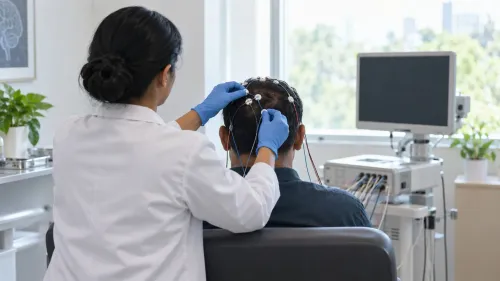
Nerve-conduction studies use surface electrodes to deliver small electrical pulses and record how quickly and strongly nerves respond. Electromyography adds a fine-needle assessment of electrical activity inside selected muscles. Together, results can separate axonal loss from demyelination, locate entrapment, support radiculopathy and distinguish peripheral neuropathy from muscle disease.
Repetitive nerve stimulation is different: repeated electrical pulses test whether signals pass properly across the neuromuscular junction, as in myasthenia gravis. Weakness, asymmetry, rapid progression or uncertainty strengthens the case for electrodiagnostic testing.
Brain MRI is relevant for sudden or focal deficits; spine MRI helps assess cord compression, nerve-root disease or severe back pain with weakness. Imaging does not show most peripheral nerve physiology, so it cannot replace nerve and muscle testing. A neurologist for nerve pain Powai should match each test to the suspected cause.
How is nerve pain treated when weakness affects safety and function?
A safe nerve pain and weakness treatment plan starts with function, not a stronger prescription. Amitriptyline may suit painful symptoms with poor sleep, while duloxetine can fit diabetic neuropathy, low mood or anxiety. Gabapentin and pregabalin can reduce nerve pain but deserve extra caution when walking or balance is already impaired.
| Option | Useful considerations | Main cautions |
|---|---|---|
| Amitriptyline | Often inexpensive; may improve sleep | Dry mouth, constipation, blurred vision, morning sedation; interactions and heart rhythm risk |
| Duloxetine | Useful with depression or anxiety; usually less sedating | Nausea, sweating, blood-pressure effects; interactions with serotonergic medicines; review liver disease |
| Gabapentin | Often inexpensive; useful when sleep is disrupted | Reduce dose as kidney function falls; dizziness, drowsiness, impaired balance and falls |
| Pregabalin | Predictable dosing; may help severe pain and sleep | Reduce dose as kidney function falls; dizziness, somnolence, blurred vision, swelling and falls; often costlier |
Pregnancy, breastfeeding, kidney disease, alcohol use and current medicines must shape the choice; do not stop treatment abruptly. Capsaicin cream suits localised pain when oral treatment is unsuitable, but it cannot explain progressive weakness. Tramadol is reserved for selected short-term rescue, not chronic routine use; opioids bring dependence, sedation, constipation and reduced function.
At follow-up, record pain, sleep, walking, grip, adherence and adverse effects. Add glucose management, daily foot checks, protective footwear, balance practice and strengthening. Anyone searching “nerve pain treatment powai” should seek review that measures safety and function, not pain alone.
How should you choose a neuropathic pain consultation in Powai?
Choose a consultation that investigates why weakness is present, not one that simply offers a pain prescription. Whether you search for a neuropathic pain doctor Powai or a neurologist for nerve pain Powai, check that the appointment covers:
- When weakness began, how quickly it changed, and whether it affects walking, grip, balance or hand function.
- Objective power, reflexes, sensation, gait and coordination during a neurological examination.
- Targeted blood tests or nerve-conduction studies and electromyography when the history and examination justify them—not an automatic test panel.
- Kidney function, other medicines, dizziness, drowsiness, falls, pregnancy considerations and interactions before changing medication.
- A review plan that measures sleep, walking, grip, daily activities, adverse effects and adherence alongside pain intensity.
A nerve pain treatment for Powai weakness should distinguish true loss of power from movement limited by pain. That distinction can change the diagnosis, urgency and treatment.
| Consultation feature | Prescription-focused visit | Assessment-led visit |
|---|---|---|
| Main goal | Reduce pain quickly | Identify the cause and protect function |
| Testing | Same test or no test | Blood or electrodiagnostic testing when indicated |
| Follow-up | Pain score alone | Strength, safety, sleep, activity and side effects |
Dr. Sachin Adukia’s neurology practice in Mumbai is an option for adults who need this kind of assessment and ongoing management, with testing selected according to the individual findings rather than assumed in advance.
Related service
Nerve Pain (Neuropathic Pain) Treatment Nerve Pain (Neuropathic Pain) Treatment Dr. Sachin Adukia offers advanced and comprehensive nerve pain (neuropathic pain) treatment for patients suffering from chronic tingling, burning,... View service → |
Frequently asked questions
When does nerve pain with weakness become an emergency?
Seek emergency care for sudden weakness, facial drooping, speech trouble, severe imbalance, new loss of bladder or bowel control, or rapidly worsening symptoms.
What does a neurological examination reveal about nerve pain and weakness?
A neurologist compares strength, reflexes, sensation, coordination, gait, and the distribution of symptoms to distinguish nerve, spinal cord, muscle, and brain problems.
Which tests identify the cause of nerve pain and weakness?
Depending on the examination, testing can include nerve conduction studies, electromyography, blood tests, MRI scans, or other targeted investigations.
How is neuropathic pain treated when weakness affects safety?
Treatment addresses the underlying cause, uses suitable nerve-pain medicines, and adds physiotherapy, mobility support, and fall-prevention measures when needed.
Keywords