Persistent numbness or tingling can originate from very different problems. A compressed nerve at the wrist, a damaged nerve in the leg, diabetic polyneuropathy, or a nerve-root problem from the spine may produce symptoms that initially seem similar. An NCS test, or nerve conduction study, helps neurologists assess how selected peripheral nerves transmit electrical signals.
For patients in Chembur, Mumbai, the most useful way to understand NCS is to see it as one part of neurological problem-solving rather than a stand-alone test that automatically provides a diagnosis.
What Does a Nerve Conduction Study Measure?
Peripheral nerves carry electrical impulses between the spinal cord and different areas of the body.
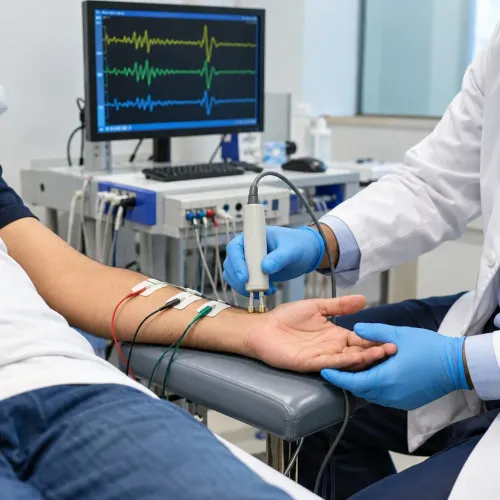
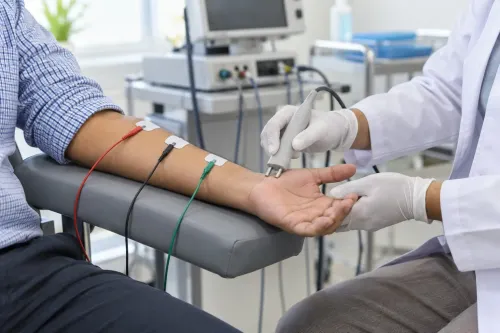
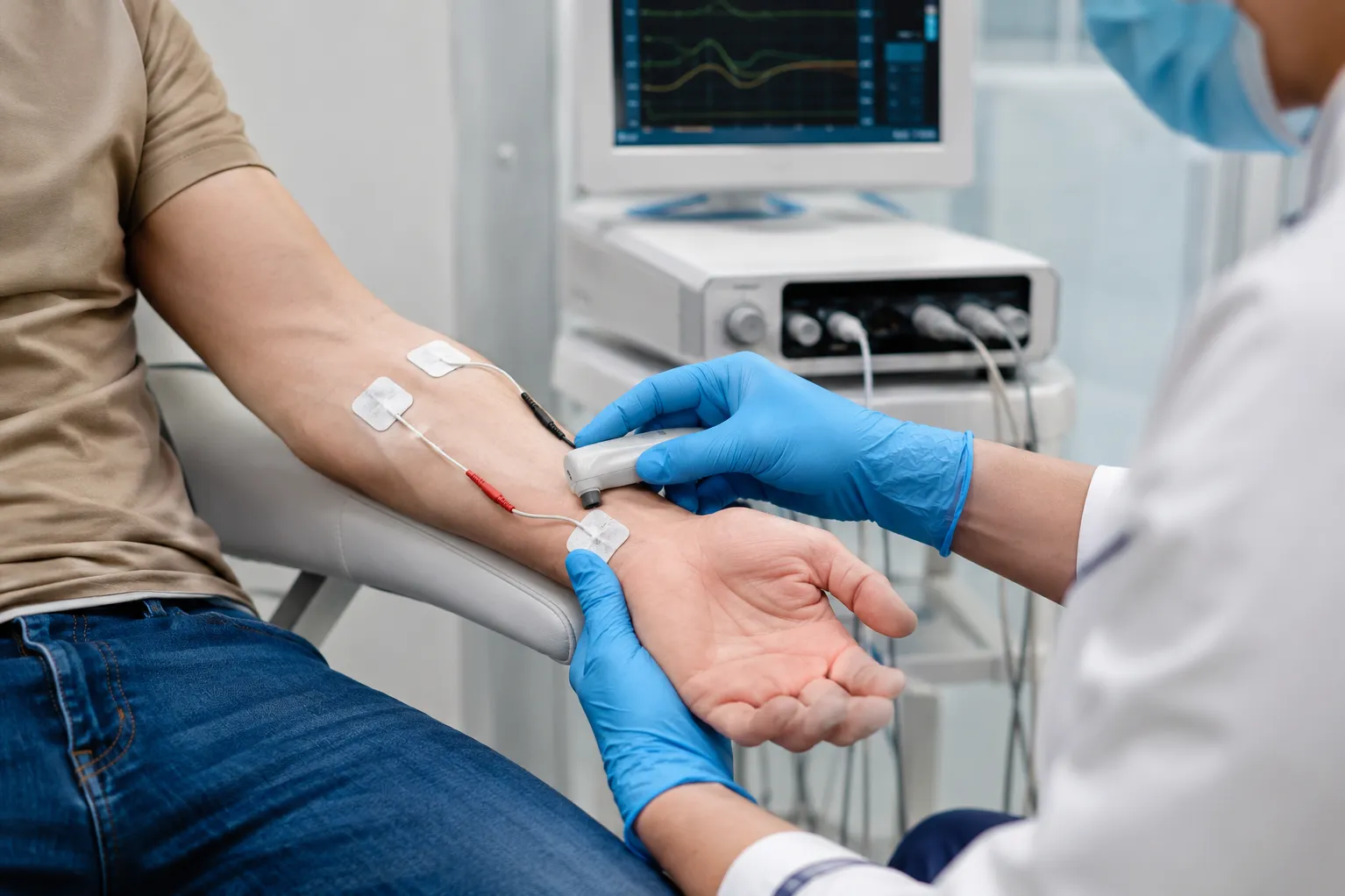
During an NCS, small electrodes are placed on the skin. A controlled electrical stimulus is applied to a nerve, and the resulting response is recorded.
The test evaluates features such as how quickly the electrical signal travels and the size of the recorded response. Abnormalities can help identify whether a peripheral nerve is affected and provide clues about the nature of the problem.
When Is an NCS Commonly Considered?
The investigation may be recommended for symptoms such as persistent tingling, numbness, weakness, altered sensation, or certain patterns of pain.
Conditions evaluated with nerve conduction studies can include:
- Carpal tunnel syndrome
- Ulnar nerve problems
- Peripheral neuropathy
- Diabetic neuropathy
- Certain immune-mediated neuropathies
- Focal nerve injuries
- Some forms of unexplained weakness
The exact nerves tested depend on the patient's symptoms and neurological examination.
NCS Is Often Combined With EMG
Patients sometimes use the terms NCS and EMG interchangeably, but they examine related yet different aspects of the neuromuscular system.
NCS primarily assesses electrical conduction along peripheral nerves.
Needle EMG evaluates electrical activity within selected muscles. When used together, the tests can provide a broader picture of nerve and muscle function.
For example, when someone has hand numbness, testing may help determine whether there is evidence of median nerve compression at the wrist or whether another neurological explanation needs consideration.
What Does the Test Feel Like?
During nerve stimulation, patients generally experience brief electrical pulses. The sensation can be surprising or uncomfortable, but each stimulus is short.
The number of nerves examined varies according to the clinical question. Testing every nerve in the body is neither necessary nor useful.
If EMG is also required, a fine needle electrode is inserted into selected muscles to record their electrical activity.
Can a Normal NCS Rule Out Every Nerve Problem?
No.
This is an important limitation to understand. Standard nerve conduction studies mainly evaluate larger peripheral nerve fibres. Certain disorders involving small nerve fibres may produce significant burning or sensory symptoms even when routine NCS findings are normal.
NCS also does not replace imaging when structural problems of the brain or spinal cord are suspected.
The result therefore needs to be interpreted in context.
What Makes Testing More Useful?
The quality of the clinical question matters.
Testing is more informative when the neurologist has first identified the distribution of numbness, weakness, reflex changes, and other examination findings. This allows the study to focus on nerves most likely to clarify the diagnosis.
Patients in Chembur with persistent nerve symptoms can consult Dr. Sachin Adukia for neurological assessment and to determine whether electrodiagnostic testing is appropriate.
An NCS test can help move the evaluation beyond the general statement that someone has “nerve pain.” By identifying patterns of peripheral nerve dysfunction and combining them with examination findings, clinicians can better distinguish focal nerve compression from generalized neuropathy and other neurological conditions, allowing treatment decisions to be based on the underlying problem rather than symptoms alone.
Keywords