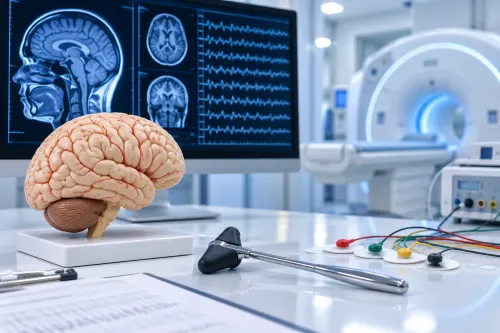
Weakness needs more than a generic muscle test: its timing, distribution, triggers and associated symptoms help determine whether the problem involves muscle, nerve, nerve root or neuromuscular junction. You will learn when to seek emergency care, what a neuromuscular evaluation involves and how clinicians choose between electrodiagnostic studies, blood tests, imaging and genetic testing.
Key takeaways
- Seek emergency care for weakness developing over minutes or hours.
- One-sided face, arm or leg weakness can signal a stroke.
- Separate true loss of power from pain, tiredness or poor coordination.
- Testing may include nerve conduction studies, EMG, blood tests or imaging.
When does weakness require emergency hospital assessment?
Call emergency services immediately if weakness develops over minutes or hours, especially in the face, arm or leg on one side. Do not delay hospital assessment while arranging a muscle weakness test Ghatkopar appointment.
| Situation | Emergency action | Why it matters |
|---|---|---|
| Sudden one-sided weakness, facial droop or speech trouble | Go to the emergency department now | These are possible stroke signs; add urgent care for new vision loss, severe imbalance or a sudden severe headache |
| Breathing difficulty, choking or inability to swallow | Call emergency services | Weakness of breathing or swallowing muscles can deteriorate quickly |
| Weakness that is rapidly spreading or worsening | Seek immediate hospital care | The pattern can signal an acute nerve, spinal cord, muscle or neuromuscular-junction problem |
| Weakness after a major fall, collision or other injury | Attend hospital urgently | Spinal cord, nerve or internal injuries need prompt assessment |
Do not drive yourself if weakness affects one side, your balance, speech or alertness. Note the time symptoms began, which body parts are affected and any medicines taken; this helps the emergency team.
An outpatient neurological appointment suits weakness that is stable and lacks these warning signs, including unexplained loss of power, repeated fatigability or gradual muscle wasting. A normal early EMG or nerve-conduction study does not always exclude disease, so return urgently if symptoms progress or swallowing and breathing become difficult.
Which weakness patterns justify neuromuscular testing?
A weakness pattern justifies neuromuscular testing when it is persistent, progressive, unexplained or repeatedly limits movement. Sudden weakness developing over minutes or hours, especially on one side with facial drooping, speech trouble, vision loss or severe headache, needs emergency stroke assessment rather than an outpatient test.
| Pattern | What it suggests | Testing decision |
|---|---|---|
| Gradual weakness on both sides | Muscle disease, motor-neuron disease, nutritional or endocrine problems | Arrange neurological assessment, especially if climbing stairs or rising from a chair becomes difficult |
| One-sided weakness | Brain, spinal-root or peripheral-nerve disease | Seek prompt assessment; sudden onset is an emergency |
| Proximal weakness | Trouble lifting the arms, climbing stairs or standing from a chair points toward myopathy, including inflammatory muscle disease | Consider muscle enzymes such as creatine kinase and targeted electrodiagnostic testing |
| Distal weakness | Dropping objects, weak grip or difficulty lifting the front of the foot points toward peripheral neuropathy or a nerve-root problem | Testing is useful when numbness, pain or reduced reflexes accompanies it |
| Fatigable weakness | Power fades with speaking, chewing, holding the arms up or repeated movement, then improves with rest | Assessment for a neuromuscular-junction disorder such as myasthenia gravis is warranted |
| Muscle wasting | Visible loss of muscle bulk suggests longstanding nerve, motor-neuron or muscle disease | Arrange testing promptly, particularly if weakness is progressing |
Do not dismiss weakness that fluctuates, worsens after exertion or continues for several weeks. A neuromuscular specialist is useful when examination findings, initial blood tests or symptoms do not fit together. If you search for neuromuscular testing ghatkopur, choose an evaluation that links the suspected pattern to the nerves and muscles examined.
Is the problem loss of power, pain, tiredness or poor coordination?
True weakness is loss of force, not simply difficulty moving. If you cannot rise from a chair despite trying, lift an arm against resistance, climb stairs, or keep your foot raised, record it as reduced power; pain, fear or stiffness can stop the movement before the muscle reaches its limit.
1. Compare effort with pain. Pain-limited movement improves when the painful joint is supported or moved gently, while true weakness remains during a pain-free task. A swollen, locked or restricted joint points to a movement problem rather than a nerve or muscle disorder.
2. Separate weakness from general tiredness. Fatigue causes low energy across many activities but leaves strength intact after rest. Weakness causes a specific failure, such as dropping objects, repeated grip loss or foot slapping.
3. Check for sensory symptoms. Numbness, burning, tingling or reduced reflexes alongside weak grip or foot lift suggests a nerve problem. Muscle disease more often causes difficulty climbing stairs or lifting both arms without numbness.
4. Identify coordination and movement symptoms. Dizziness causes unsteadiness; tremor produces rhythmic shaking; poor coordination makes movements inaccurate even when force is normal. Neither proves muscle weakness.
5. Note fluctuation. Weakness that worsens with repeated use and improves after rest raises concern for impaired nerve-to-muscle transmission. Progressive wasting, persistent weakness or unexplained failure deserves neurological assessment rather than self-testing.
Bring a short record of triggers, affected tasks and videos of recurring movements to an appointment. A search for “nerve muscle testing ghatkopar” can locate services, but the examination must decide whether electrodiagnostic testing is appropriate.
What happens during a neuromuscular evaluation?
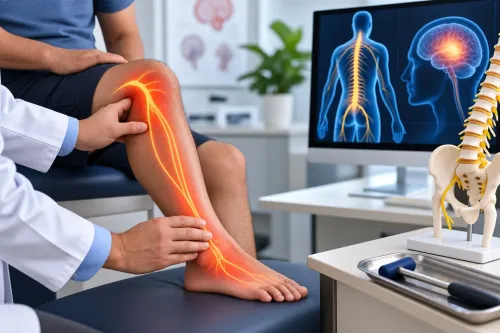
It maps where weakness is occurring and whether it reflects muscle, nerve, nerve root, neuromuscular junction or poor coordination. The clinician compares both sides, reviews onset and progression, and selects tests that answer a specific question rather than ordering a generic screen.
- The neurological examination identifies weakness patterns, muscle wasting, abnormal movements and coordination problems.
- Manual strength testing grades movements such as shoulder elevation, elbow flexion, grip, hip flexion and ankle lifting, revealing proximal or distal weakness.
- Reflex checks help detect reduced responses from peripheral nerve or nerve-root disease, or brisk responses from central nervous-system involvement.
- Sensation checks look for numbness, altered pinprick, vibration loss or a clear nerve-distribution pattern.
- Gait assessment reveals foot drop, waddling, spasticity, imbalance and weakness that appears during repeated walking or stair climbing.
- Cranial-nerve examination checks eye movements, eyelid drooping, facial power, speech, swallowing and tongue movement.
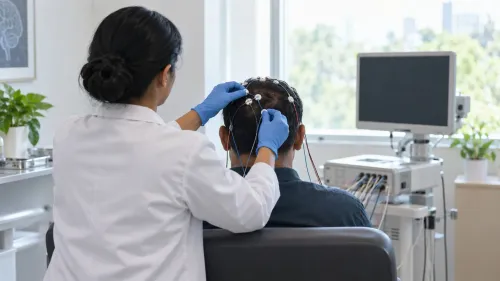
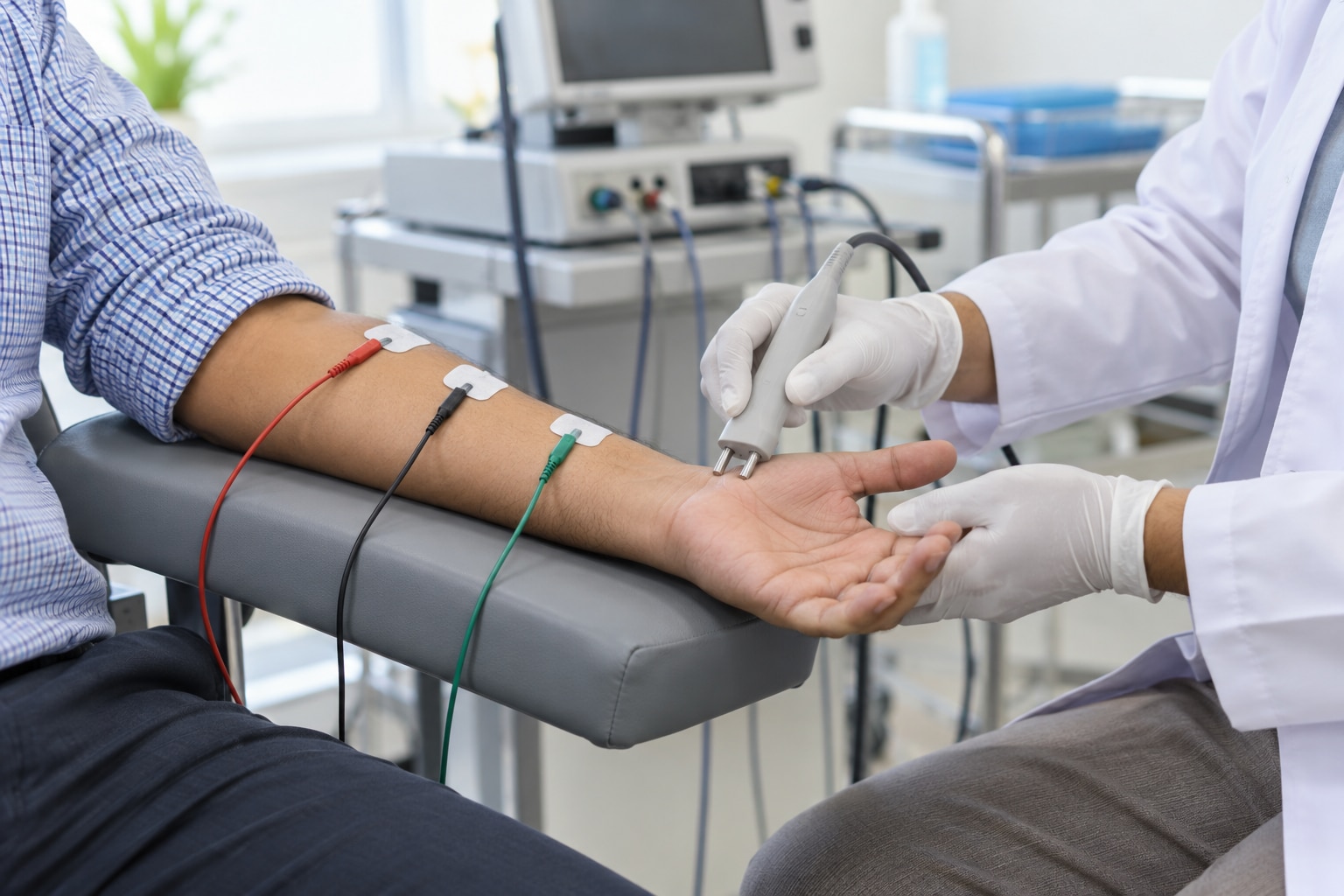
Nerve-conduction studies measure sensory and motor nerve responses; needle EMG records electrical activity in muscle. Together, they can distinguish radiculopathy, plexus or peripheral-nerve disease from muscle disease and impaired neuromuscular transmission. A normal early study does not always exclude disease, so repeat testing or blood tests may be needed if weakness progresses.
The phrase neuromuscular disorder test ghatkopar is a search label, not a pass-or-fail test. The muscles and nerves examined must match the clinical findings and suspected diagnosis.
How does a specialist choose the right test in Ghatkopar?
The examination determines the question before anyone chooses a test. Nerve-conduction studies measure sensory and motor nerve responses, while needle EMG records muscle activity; together they can locate disease in a nerve root, plexus, peripheral nerve, neuromuscular junction or muscle.
| Test | What it assesses | When it applies |
|---|---|---|
| EMG and nerve-conduction studies | Nerve signals and muscle electrical activity | Suspected neuropathy, radiculopathy, focal nerve injury or myopathy |
| Repetitive nerve stimulation | Transmission between nerve and muscle | Fluctuating or fatigable weakness suggesting myasthenia gravis or Lambert-Eaton syndrome |
| Single-fibre EMG | Very small timing differences between muscle fibres | Persistent suspected neuromuscular-junction disease when routine studies are inconclusive |
| Blood tests | CK, thyroid function, electrolytes, inflammatory markers, acetylcholine-receptor and MuSK antibodies | Muscle injury, endocrine or metabolic causes, inflammatory disease, or suspected myasthenia |
| Imaging | MRI of the brain, spine or muscle; sometimes muscle ultrasound | A structural lesion, nerve-root compression, muscle inflammation or muscle wasting needs clarification |
| Genetic testing | An inherited disease variant | A characteristic pattern, early onset or family history suggests muscular dystrophy or another inherited myopathy |
| Biopsy | Direct tissue evidence from muscle or nerve | Results remain unexplained and tissue findings will change treatment; it is invasive |
A negative antibody result does not rule out myasthenia, and a normal early EMG or nerve-conduction study may need repeating if weakness progresses. A neuromuscular specialist referral is useful for unexplained, progressive or wasting weakness, abnormal reflexes, swallowing or breathing symptoms, or tests that conflict with the examination.
For neuromuscular testing Ghatkopar, Dr. Sachin Adukia can help frame the clinical question before testing; searching neuromuscular specialist Ghatkopar is a referral step, not a separate test.
Related services
Neuromuscular Disorder Testing Neuromuscular Disorder Testing under the guidance of Dr. Sachin Adukia is a comprehensive diagnostic service designed to accurately identify disorders affecting the nerves,... View service → |
Neurology Diagnostic Services Dr. Sachin Adukia offers comprehensive and advanced Neurology Diagnostic Services focused on the accurate evaluation and early detection of disorders... View service → |
Frequently asked questions
When does weakness require emergency hospital assessment?
Call emergency services immediately if weakness develops over minutes or hours, particularly in the face, arm or leg on one side. Do not wait for an outpatient muscle weakness test appointment.
Which weakness patterns justify neuromuscular testing?
Arrange assessment for persistent, progressive or repeated weakness, especially when it affects walking, climbing stairs, lifting, grip, swallowing, speech or breathing. A specialist selects tests based on the pattern and examination.
How can you distinguish loss of power from pain, tiredness or poor coordination?
True weakness means a muscle cannot generate normal force. Pain can limit effort, tiredness reduces endurance, and poor coordination causes inaccurate movement despite preserved strength. Examination helps separate these problems.
What happens during a neuromuscular evaluation?
The specialist reviews onset, progression, medications and family history, then examines strength, reflexes, sensation, gait and coordination. Testing may include nerve conduction studies, electromyography, blood tests, imaging or genetic testing.
How does a specialist choose the right test in Ghatkopar?
The specialist matches testing to the affected muscles, nerves and body distribution, along with the timing and associated symptoms. Nerve conduction studies and EMG assess nerve-muscle function, while blood tests or imaging investigate other causes.
Keywords