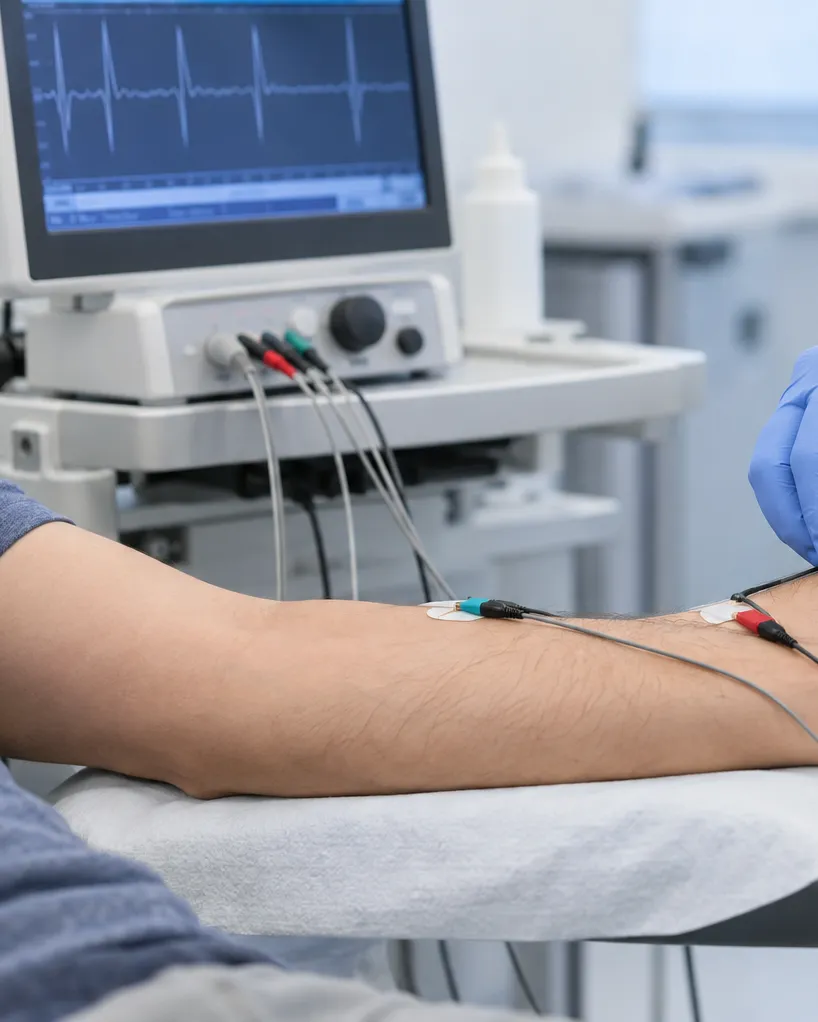
When muscle weakness persists, identifying its source is not always straightforward. The problem may arise from a peripheral nerve, a nerve root leaving the spine, the muscle itself, or another part of the neuromuscular system. An EMG test, or electromyography, is one investigation that can help clarify these possibilities when used alongside a neurological examination.
For patients in Govandi and nearby areas of Mumbai, Maharashtra, knowing what EMG can and cannot reveal can make the testing process less confusing.
EMG Looks at Electrical Activity in Muscles
Muscles generate electrical activity when they are activated. Their electrical behaviour can change when the muscle itself is diseased or when the nerve supplying it has been damaged.
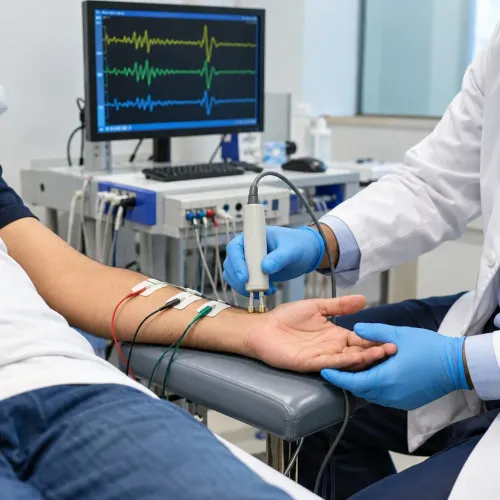
During needle EMG, a fine electrode is inserted into selected muscles. Electrical activity is recorded while the muscle is at rest and during controlled contraction.
The doctor chooses which muscles to examine according to the symptoms and suspected neurological location.
This targeted approach is important because EMG is not simply a routine scan of every muscle.
Why Might a Neurologist Recommend EMG?
EMG may be considered when evaluating:
- Unexplained muscle weakness
- Suspected nerve-root problems
- Certain peripheral nerve injuries
- Muscle wasting
- Some neuromuscular disorders
- Selected motor neuron conditions
- Symptoms requiring distinction between nerve and muscle causes
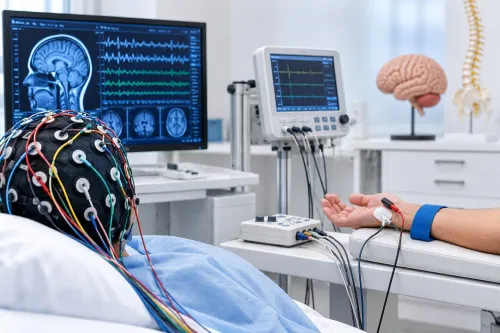
It is commonly performed alongside nerve conduction studies because the two investigations provide complementary information.
EMG and MRI Answer Different Questions
Patients with neck or back symptoms sometimes wonder whether an MRI makes EMG unnecessary.
It does not necessarily.
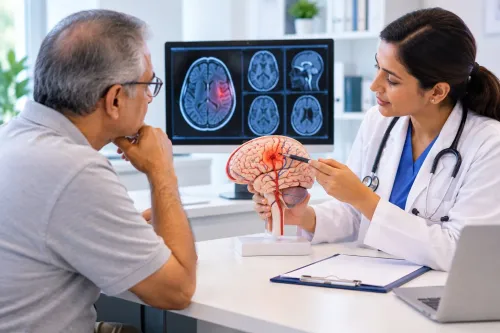
MRI shows anatomy. It may demonstrate a disc protrusion, narrowing around a nerve root, degenerative changes, or another structural abnormality.
EMG evaluates aspects of physiological function. In an appropriate clinical setting, it can help determine whether there is evidence that a nerve supplying a particular muscle has been affected.
This distinction becomes valuable because structural changes on MRI do not always produce symptoms. Many people have age-related spine abnormalities without corresponding neurological deficits.
Conversely, EMG findings must also be interpreted carefully and cannot answer every structural question.
What Should Patients Expect?
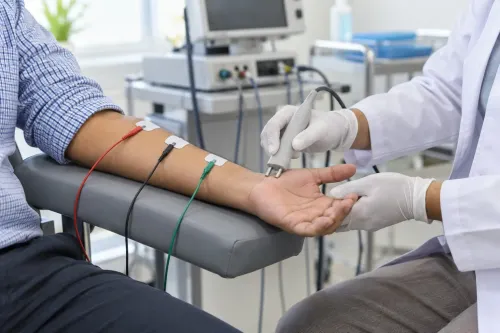
The test involves inserting a small needle electrode into selected muscles. Patients may feel brief discomfort during insertion and when activating the muscle.
The number of muscles examined varies. Testing may focus on one limb or include additional regions when the neurological question requires comparison.
Patients should inform the medical team about blood-thinning medicines, bleeding disorders, implanted devices, and other relevant medical conditions before testing.
Why Clinical Interpretation Matters
An EMG report contains measurements and descriptions, but the numbers do not exist independently from the patient.
Age, symptom duration, body region, clinical examination, previous surgery, diabetes, injuries, and other factors can affect interpretation.
An abnormal result may support a particular neurological localization, while a normal result may narrow the possibilities without necessarily excluding every disorder.
This is why testing is most effective when ordered to answer a specific question rather than used indiscriminately for any pain complaint.
When Persistent Weakness Needs Assessment
Weakness that progresses, affects daily tasks, causes repeated falls, produces visible muscle wasting, or occurs with significant sensory changes should be medically evaluated.
Sudden weakness, particularly on one side of the body or accompanied by speech or facial changes, requires urgent assessment rather than waiting for an outpatient EMG.
For patients in Govandi, Dr. Sachin Adukia can assess whether symptoms point toward peripheral nerve, nerve-root, muscle, or other neurological involvement and whether electrodiagnostic testing would add useful information.
An EMG test is ultimately a localization tool. Used thoughtfully with nerve conduction studies, imaging, and neurological examination, it can help clinicians move from the broad complaint of “weak muscles” toward a more precise understanding of where dysfunction may be occurring.
Keywords