Visual problems are not always caused by a problem within the eye itself. Vision depends on a pathway that carries information from the retina through the optic nerve and other parts of the nervous system to the visual areas of the brain. If there is concern that this pathway is not working normally, a neurologist may recommend a VEP test, or visual evoked potential test.
For patients in Chandivali and surrounding areas of Mumbai, understanding what a VEP test can and cannot show can make the investigation easier to understand.
What Does a VEP Test Measure?
A VEP measures the electrical response of the brain when the eyes are shown a visual stimulus.
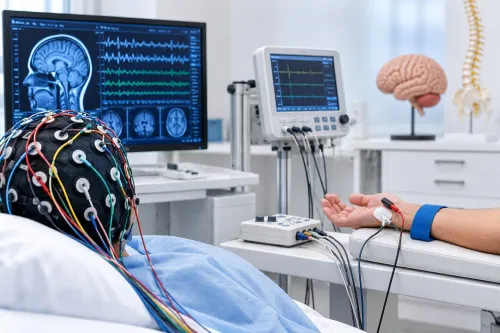
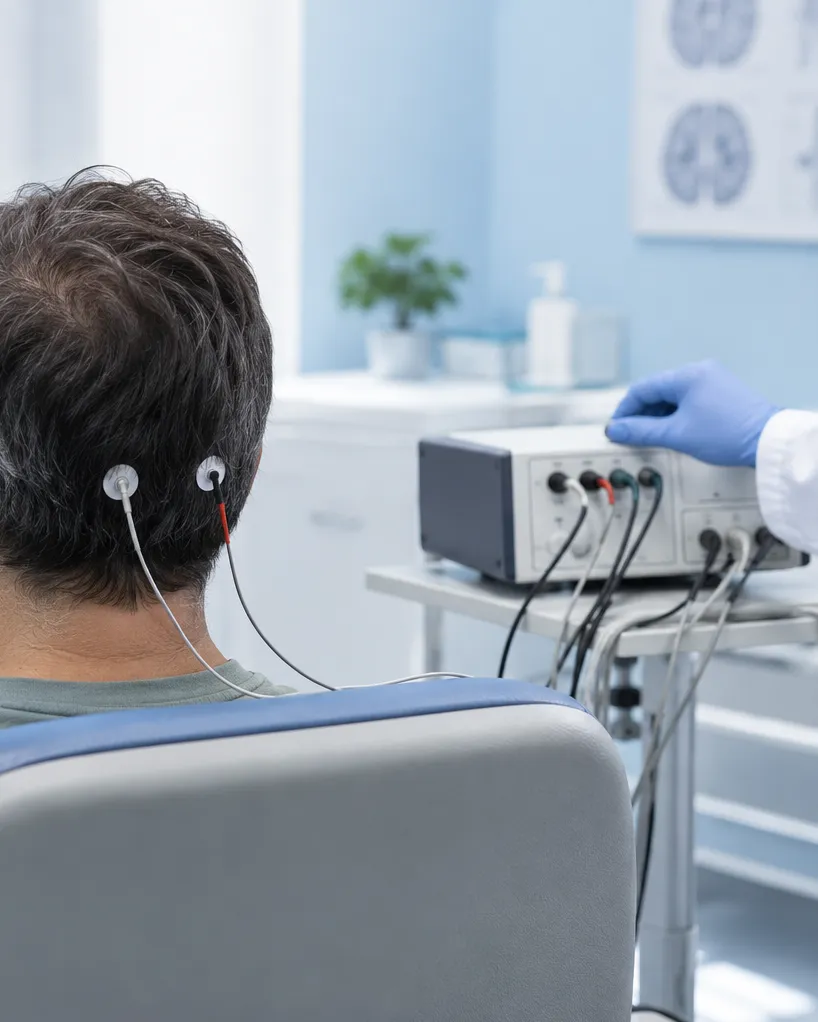
During a commonly used form of VEP testing, the patient looks at a changing checkerboard pattern on a screen. Small recording electrodes are placed on the scalp over the visual areas of the brain. The equipment records the electrical response produced when the visual signal reaches the brain.
The test mainly looks at how quickly and how consistently this visual signal travels through the visual pathway.
If the response is delayed or otherwise abnormal, it may provide supportive evidence that conduction somewhere along the visual pathway is not normal. However, a VEP result by itself does not usually establish the exact cause of the abnormality.
Is VEP the Same as an Eye Examination?
No.
An eye examination looks directly at the eyes and may assess visual acuity, the retina, optic disc, eye movements, eye pressure, and other aspects of eye health.
A VEP asks a different question: whether a visual signal produces an appropriate electrical response along the pathway between the eye and the visual areas of the brain.
The two types of examination can therefore provide different and complementary information.
When Might a VEP Be Recommended?
A neurologist may consider VEP when there is a concern about the optic nerve or visual pathways.
It may be useful as a supportive investigation in selected situations such as:
Suspected optic nerve dysfunction
Previous or suspected optic neuritis
Some demyelinating neurological disorders
Unexplained abnormalities involving the visual pathway
Selected situations where an objective assessment of visual pathway function is needed
VEP is not required for every person with blurred vision or visual disturbance. The decision depends on the symptoms, neurological examination, eye examination, and other investigations.
What Happens During the Test?
The patient sits in front of a screen and is asked to look at a visual pattern. Small electrodes placed on the scalp record the brain's response.
Each eye may be tested separately.
The test is generally non-invasive. It does not involve injections or needles. The patient needs to keep the eyes focused on the visual stimulus during the recording.
Wearing the usual glasses or other prescribed visual correction may be important, so patients should follow the instructions provided by the testing centre.
What Can an Abnormal VEP Mean?
An abnormal VEP may indicate that the visual signal is travelling differently from what is expected.
This can occur when the optic nerve or another part of the visual pathway has been affected. However, the VEP does not by itself tell the doctor exactly where the problem is or what caused it.
For this reason, VEP results need to be interpreted together with the patient's symptoms and neurological and ophthalmological examinations.
Depending on the clinical situation, MRI of the brain and optic pathways, optical coherence tomography (OCT), visual-field testing, or other eye investigations may also be required.
Can a Normal VEP Rule Out a Neurological Problem?
No.
A normal VEP does not exclude every disorder affecting vision or the visual pathway. Similarly, an abnormal VEP does not automatically mean that a person has a particular neurological disease.
The usefulness of the test depends on the clinical question for which it was performed.
When Should Visual Symptoms Be Assessed Urgently?
Sudden loss of vision, new weakness, difficulty speaking, severe eye pain associated with visual deterioration, or visual symptoms occurring together with other sudden neurological symptoms require prompt medical assessment.
Patients in Chandivali can consult Dr. Sachin Adukia when visual symptoms suggest a possible neurological component or when a neurological investigation has been recommended.
A VEP test provides information about the function of the visual pathway. Its greatest value comes from combining this information with the patient's symptoms, examination, eye assessment, and imaging when required.
Keywords