Not every episode of shaking, staring, collapse, confusion, or unusual behaviour is necessarily an epileptic seizure. At the same time, some seizures can be subtle enough to resemble daydreaming, fainting, sleep disturbances, or psychological events. When the nature of recurrent episodes remains uncertain, a Video EEG test can provide information that an ordinary description may not capture.
For patients in Mulund and other areas of Mumbai, Maharashtra, understanding the difference between routine EEG and video EEG can make the investigation process clearer.
What Does Video EEG Actually Record?
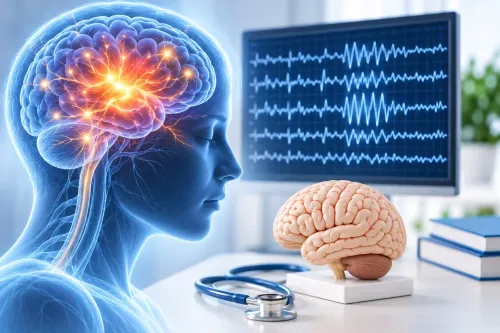
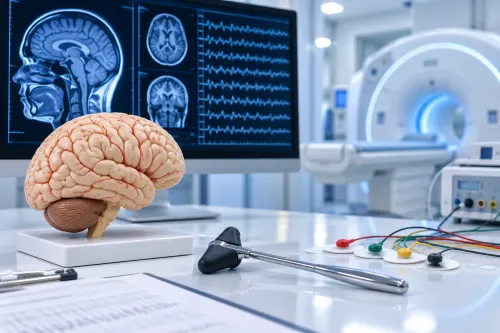
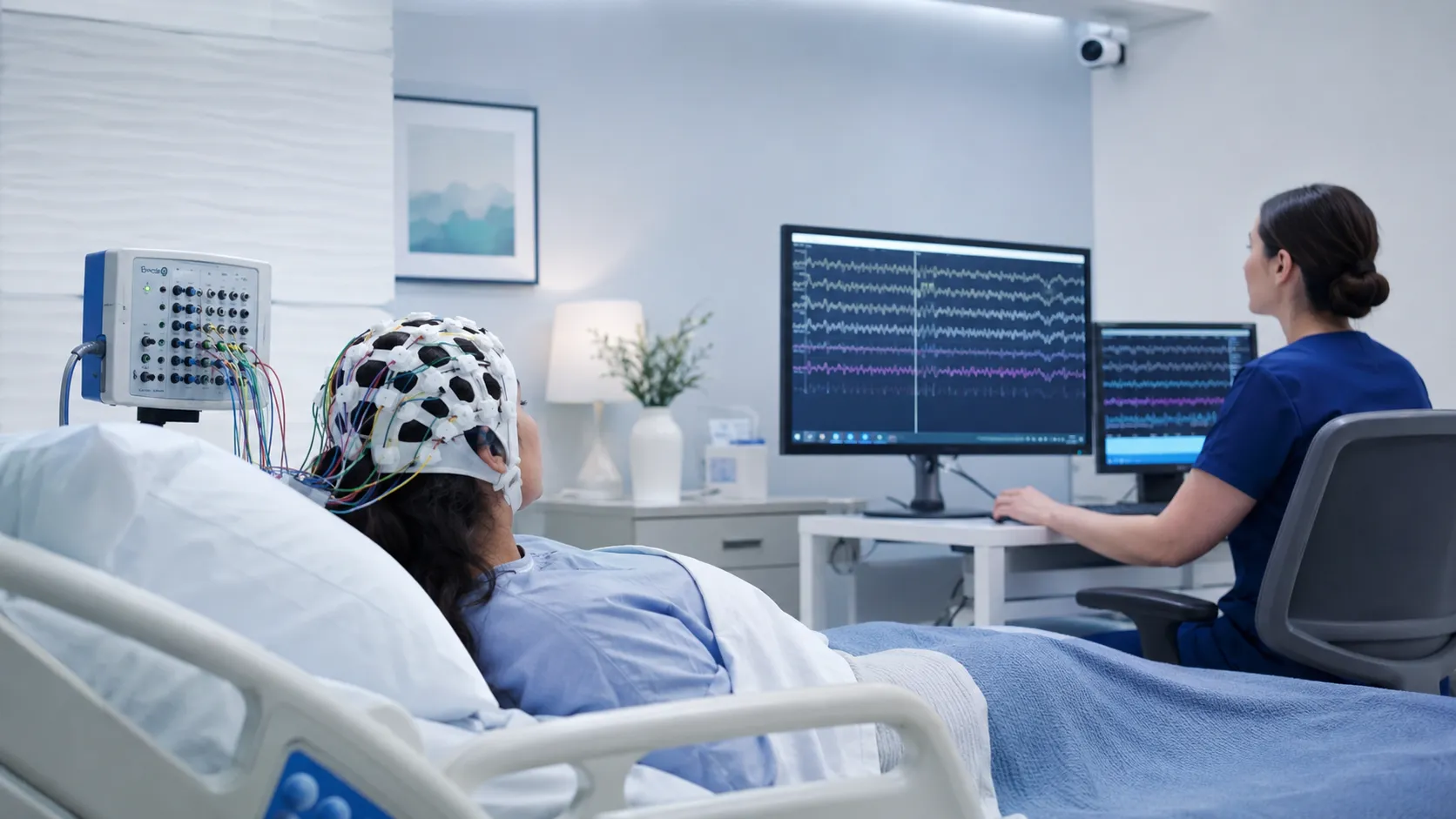
A standard EEG records electrical activity from the brain using electrodes placed on the scalp. Video EEG combines this electrical recording with synchronized video footage of the patient.
The advantage is straightforward: doctors can compare what physically happens during an episode with the brain's electrical activity at exactly the same time.
This can be particularly useful when the central question is not simply whether an EEG has abnormalities, but whether a patient's habitual episodes correspond to epileptic activity.
Routine EEG and Video EEG Are Not Identical
A routine EEG is generally performed for a shorter period and may be useful when investigating suspected epilepsy and several other neurological situations.
The difficulty is that a patient may not experience their usual episode during a short recording. In addition, a normal routine EEG does not automatically exclude epilepsy.
Video EEG monitoring can extend the observation period and improve the opportunity to capture an event. The required duration varies according to the frequency and nature of the patient's symptoms.
When Might Video EEG Be Considered?
A neurologist may consider this investigation when a patient experiences recurrent events such as:
- Unexplained staring spells
- Episodic loss of awareness
- Recurrent abnormal movements
- Suspected nocturnal seizures
- Uncertain seizure-like episodes
- Events continuing despite treatment
- Episodes where epilepsy and non-epileptic events need differentiation
It can also be useful in selected patients with established epilepsy when more detailed characterization of seizure type is required.
What Happens During Monitoring?
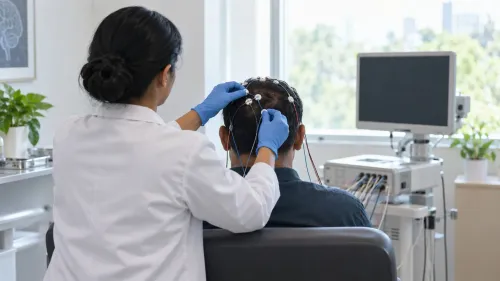
Electrodes are attached to the scalp and connected to EEG recording equipment while a camera continuously records the patient's visible behaviour.
Depending on the purpose of testing, monitoring may last for several hours or longer. Patients or accompanying caregivers may be asked to identify when a typical episode occurs.
In some specialized settings, medication changes or other activation procedures may be considered under medical supervision. These decisions should not be attempted independently before the test.
Why Capturing a Typical Episode Matters
Suppose a patient repeatedly experiences sudden shaking. The outward appearance alone may not always establish whether the event is epileptic.
If the typical event occurs during video EEG, specialists can examine both the physical behaviour and the corresponding electrical pattern.
This information may help classify seizures, distinguish some epileptic events from non-epileptic episodes, and guide subsequent management.
Importantly, interpretation is not always as simple as seeing a single abnormal line on the recording. EEG findings need to be evaluated by clinicians familiar with electroencephalography and considered together with the patient's history.
Preparing for the Investigation
Patients should generally provide an accurate medication list and describe their typical episodes in detail. Information from someone who has witnessed the events can be valuable.
Videos recorded safely by family members during previous episodes may also provide useful clinical context.
Medication should not be stopped unless the treating medical team specifically instructs the patient to do so.
In Mulund, patients with unexplained recurrent neurological events may consult Dr. Sachin Adukia to determine whether routine EEG, video EEG, imaging, or another investigation fits their presentation.
A Video EEG test is most valuable when it answers a defined clinical question. Rather than testing every person with dizziness or fainting, it is used selectively to connect symptoms with brain electrical activity and improve diagnostic confidence when episodic neurological events remain unclear.
Keywords